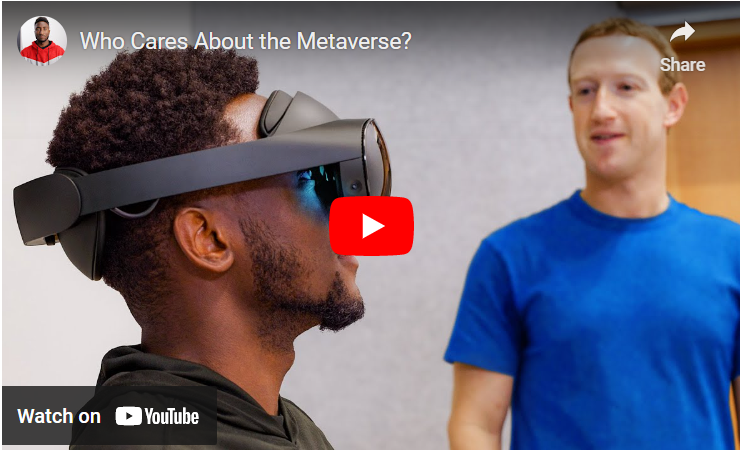
Actual thoughts from Marques about the “metaverse” and VR and AR right now.
0:00 The Intro
2:15 Who Cares about the Metaverse?
4:44 The Technology
7:59 Is It Actually the Future?
13:33 The Problem
—
So what is the Metaverse? Author Neal Stephenson coined the term “metaverse” in 1992 in his science-fiction novel “Snow Crash,” which discussed a virtual reality-based successor to the Internet. Investopedia defines it as “a shared virtual environment that people access via the Internet. Technologies like virtual reality (VR) and augmented reality (AR) are combined in the metaverse to create a sense of ‘virtual presence.’”
In other words, the Metaverse is the idea that the aforementioned virtual and augmented reality experiences will eventually be connected, offering people a way to move from one environment to another within a much larger and interconnected virtual environment. This is analogous to the way people move from one building to another within the same city in the real world.
Virtual Reality (VR)
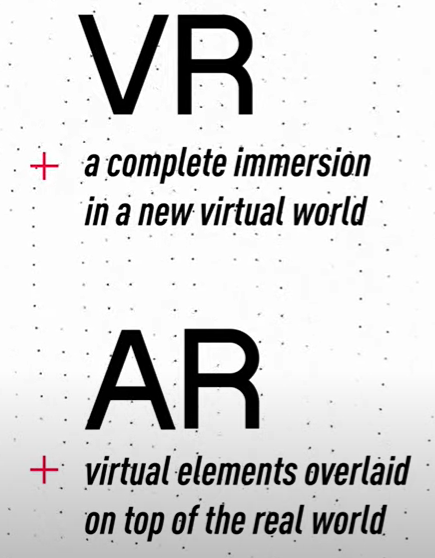
Virtual Reality (VR) is the use of computer modeling and simulation that enables a person to interact with an artificial three-dimensional visual or other sensory environments. These environments can be designed to realistically simulate real-world environments and events, which helps our brains process the experiences we have in VR in the same way we process real-life experiences. Pilots have trained for years on flight simulators; these simulators are an example of VR.
Augmented Reality (AR)
Augmented Reality (AR) is a process of combining or “augmenting” our view of the real world with digital images using video or photographic displays. Forbes states: “In augmented reality, virtual information and objects are overlaid on the real world. This experience enhances the real world with digital details such as images, text, and animation.” Examples of AR include the Pokemon Go game or interior decorating apps that allow you to see what furniture would look like in your home.
Extended Reality (XR)
Extended Reality (XR) is an umbrella term that accounts for all immersive technologies that extend the reality we experience by either blending the virtual and “real” worlds or by creating a fully immersive experience. VR and AR can be thought of as subcategories of XR, or technologies that exist on the spectrum of XR technologies. XR is often used as a term to reference the entire category of VR and AR technologies.
The roles of VR, AR and MR on the Metaverse
As we all know by now, the metaverse is a much broader concept than just virtual gaming, and it’s a combination of virtual reality (VR), augmented reality (AR), mixed reality (MR), blockchain, web3, cryptocurrencies, social media, and much more.
===