Exchange-Traded Funds (ETFs) are investment funds that are traded on stock exchanges, much like individual stocks. They are designed to track the performance of a specific index, commodity, bond, or basket of assets.
ETFs are investment vehicles that combine the benefits of stocks and mutual funds. They provide investors with diversification, liquidity, transparency, and cost-efficiency across a wide range of asset classes. It is crucial for investors to conduct due diligence and understand the specific characteristics and risks of each ETF they consider adding to their portfolio.
Today, ETFs are a prominent part of the investment landscape, with trillions of dollars in Assets Under Management (AUM) globally. They offer investors diversification, liquidity, and cost-effectiveness, making them a popular choice for both individual and institutional investors.
ETFs have gained significant popularity among investors due to their flexibility, liquidity, and cost-effectiveness.
Overview
- Structure: ETFs are structured as open-end investment companies or unit investment trusts. They issue shares to investors and pool the proceeds to buy the underlying assets, which could be stocks, bonds, commodities, or other financial instruments.
- Liquidity: One of the key advantages of ETFs is their liquidity. They can be bought or sold throughout the trading day at market prices, just like stocks. This is in contrast to mutual funds, which are typically priced once a day after the market closes.
- Diversification: ETFs offer instant diversification because they hold a basket of assets. For example, a stock ETF might hold shares of multiple companies, reducing the risk associated with individual stocks.
- Variety: There are ETFs for a wide range of asset classes, including equities, fixed income, commodities, currencies, and even alternative investments like real estate or cryptocurrencies.
- Transparency: ETFs provide transparency as they disclose their holdings on a daily basis. Investors can see exactly what assets the ETF holds, unlike some mutual funds.
- Low Expense Ratios: ETFs are known for their low expense ratios, which represent the costs associated with managing the fund. These costs are typically lower than those of actively managed mutual funds.
- Tax Efficiency: ETFs are generally tax-efficient investment vehicles. They have mechanisms that allow investors to minimize capital gains taxes, such as in-kind redemptions.
- Market Orders: Investors can place various types of orders when trading ETFs, including market orders, limit orders, and stop orders, offering greater control over the execution price.
- Creation and Redemption: The creation and redemption process is unique to ETFs. Authorized participants (usually large financial institutions) can create or redeem ETF shares by exchanging the underlying assets with the ETF provider. This mechanism helps keep the ETF’s market price in line with its Net Asset Value (NAV).
- Dividends and Income: ETF investors may receive dividends or interest income from the underlying assets held by the fund. These payments are typically distributed to shareholders periodically.
- Risk: Like all investments, ETFs carry risks. The value of an ETF can fluctuate based on the performance of the underlying assets. It’s essential for investors to understand the risks associated with the specific ETF they are considering.
- Popular ETF Providers: Some well-known ETF providers include BlackRock (iShares), Vanguard, State Street Global Advisors (SPDRs), and Invesco (PowerShares), among others.
- Uses: ETFs are used by investors for various purposes, including long-term investing, trading, hedging, and diversification within a portfolio.
Background
Exchange-Traded Funds (ETFs) have a relatively short but impactful history in the world of finance. Here’s a brief overview of their history:
- Early Concepts (1980s): The concept of ETFs can be traced back to the late 1980s. Various financial professionals and organizations were exploring ways to create investment products that combined the benefits of both mutual funds and individual stocks. Nathan Most, a portfolio manager, is often credited with developing the first prototype for an ETF.
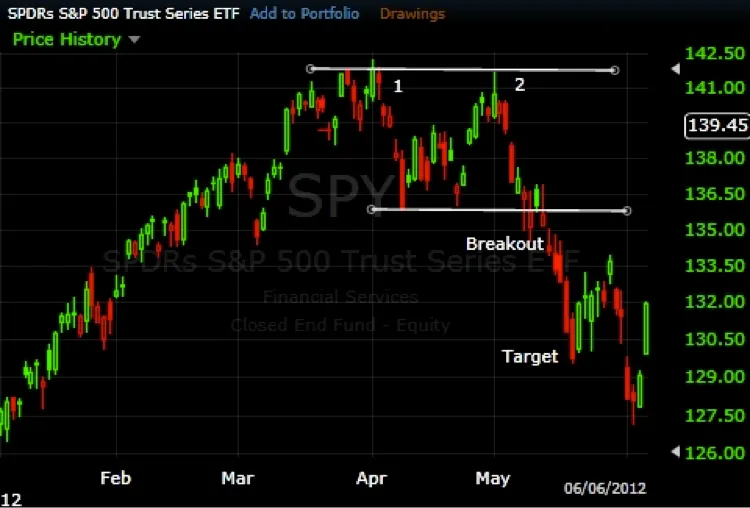
- Introduction of SPY (1993): The first ETF, known as the Standard & Poor’s Depositary Receipt (SPDR) or “Spider,” was introduced by State Street Global Advisors in January 1993. This ETF aimed to track the performance of the S&P 500 Index and became a pioneer in the ETF industry. SPY is still one of the largest and most widely traded ETFs today.
- Expansion of ETF Offerings (1990s): Throughout the 1990s, more ETFs were introduced, covering various asset classes and sectors. ETFs gained popularity among institutional investors due to their flexibility, liquidity, and tax advantages compared to mutual funds.
- iShares and Vanguard’s Entry (2000s): In the early 2000s, iShares (owned by BlackRock) and Vanguard entered the ETF market, further expanding the range of available ETFs. iShares, in particular, introduced a broad selection of ETFs tracking various indices.
- Growth in Popularity (2000s – 2010s): ETFs experienced significant growth in assets under management (AUM) during the 2000s and 2010s. Investors appreciated their low expense ratios, intraday trading, and tax efficiency. ETF providers continued to innovate by introducing specialized ETFs, including those focused on commodities, sectors, and fixed-income securities.
- Smart Beta and Factor ETFs (2010s): In the 2010s, ETF providers began offering “smart beta” or “factor” ETFs. These ETFs aim to outperform traditional market-cap-weighted indices by using alternative weighting schemes based on factors like value, growth, low volatility, and momentum.
- Global Expansion: ETFs have also gained traction internationally. Various countries have introduced their own ETFs, and ETF providers have launched global products to cater to investors seeking exposure to international markets.
- ESG and Sustainable ETFs: In response to growing interest in environmental, social, and governance (ESG) investing, ETF providers have developed ESG and sustainable ETFs. These funds incorporate ESG criteria into their investment strategies.
- Continued Innovation: ETFs have continued to evolve, with the introduction of leveraged and inverse ETFs, actively managed ETFs, and cryptocurrency ETFs (in some regions where regulations permit). ETFs now cover an extensive range of asset classes, industries, and investment strategies.
Examples
Top Exchange-Traded Funds (ETFs) that are popular.
The performance and popularity of ETFs can change over time, and new ETFs are always emerging. It is essential to conduct up-to-date research and consider your investment goals and risk tolerance before investing in any ETF. Additionally, consulting with a financial advisor can provide personalized guidance based on your individual circumstances.
SPDR S&P 500 ETF Trust (SPY)
- Asset Class: U.S. Large-Cap Stocks
- Objective: Tracks the performance of the S&P 500 Index, providing exposure to 500 of the largest U.S. companies.
Invesco QQQ Trust (QQQ)
- Asset Class: U.S. Technology Stocks
- Objective: Tracks the NASDAQ-100 Index, which includes 100 of the largest non-financial companies listed on the NASDAQ Stock Market.
iShares Russell 2000 ETF (IWM)
- Asset Class: U.S. Small-Cap Stocks
- Objective: Tracks the Russell 2000 Index, offering exposure to smaller U.S. companies.
Vanguard Total Stock Market ETF (VTI)
- Asset Class: U.S. Total Stock Market
- Objective: Seeks to replicate the performance of the CRSP US Total Market Index, covering nearly the entire U.S. stock market.
iShares Core U.S. Aggregate Bond ETF (AGG)
- Asset Class: U.S. Bonds
- Objective: Tracks the Bloomberg Barclays U.S. Aggregate Bond Index, providing diversified exposure to the U.S. investment-grade bond market.
Vanguard Total International Stock ETF (VXUS)
- Asset Class: International Stocks
- Objective: Seeks to track the performance of the FTSE Global All Cap ex US Index, offering exposure to international equities.
Invesco Solar ETF (TAN)
- Asset Class: Renewable Energy Stocks
- Objective: Tracks the MAC Global Solar Energy Index, offering exposure to companies in the solar energy industry.
SPDR Gold Trust (GLD)
- Asset Class: Gold
- Objective: Reflects the performance of the price of gold bullion, allowing investors to gain exposure to the price of gold without owning physical gold.
iShares iBoxx $ Investment Grade Corporate Bond ETF (LQD)
- Asset Class: U.S. Investment-Grade Corporate Bonds
- Objective: Tracks the Markit iBoxx USD Liquid Investment Grade Index, providing exposure to high-quality corporate bonds.
VanEck Vectors Semiconductor ETF (SMH)
- Asset Class: Semiconductor Stocks
- Objective: Tracks the MVIS US Listed Semiconductor 25 Index, offering exposure to companies in the semiconductor industry.