In today’s world, generational labels are commonly used to describe the unique characteristics, preferences, and behaviors of different age groups. These generational categories have become a staple in discussions around marketing, social behavior, and cultural shifts.
The following is a comprehensive breakdown of the various generations and what makes each of them distinct.
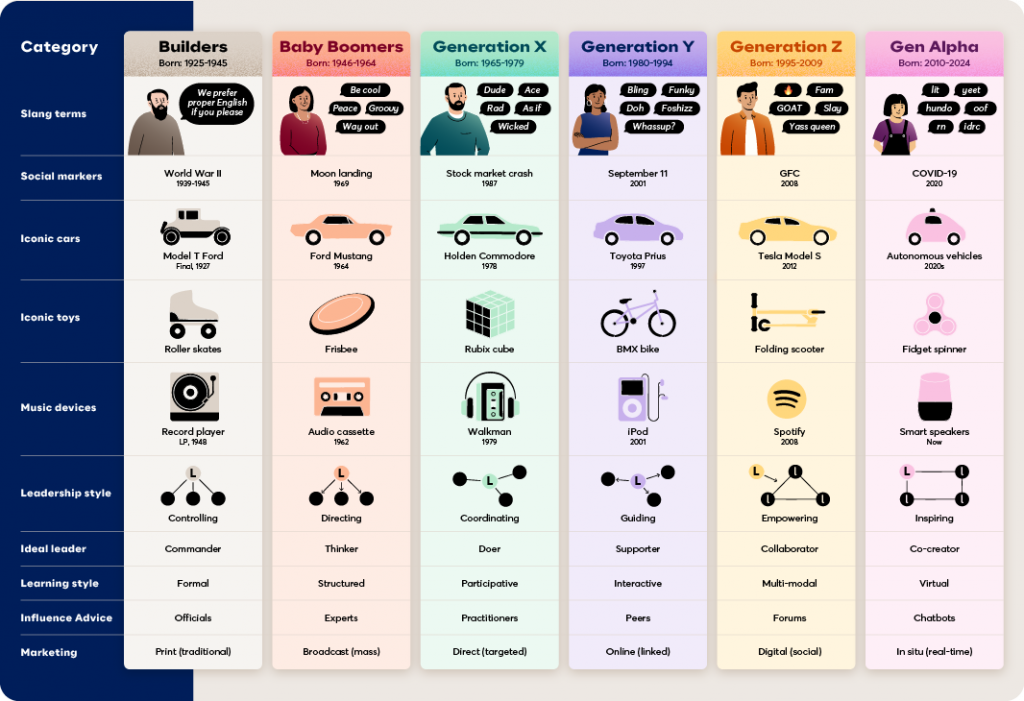
Baby Boomers (Born 1946-1964)
Baby boomers, often regarded as the generation that helped shape modern society, were born between 1946 and 1964. They are currently between 61 and 79 years old and make up around 73 million people in the U.S. This generation is famous for their influence on the economy, having driven massive consumer demand during their prime working years.
Baby boomers witnessed significant technological and social changes, from the rise of television to the moon landing and the growth of the civil rights movement. Today, many boomers are retiring or nearing retirement, but they remain active consumers, especially in sectors like healthcare, travel, and leisure.
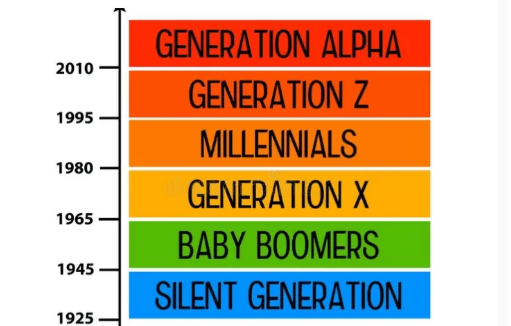
Generation X (Born 1965-1980)
Generation X, often known for their “latchkey kid” upbringing, was born between 1965 and 1980, making them 45 to 60 years old today. With an estimated 65 million people in the U.S., Gen X is often overlooked in discussions about generational trends, but they are a critical group in terms of cultural and economic impact.
Gen Xers were the first to experience the rise of the personal computer, the internet, and the emergence of alternative music and pop culture. They are known for their resourcefulness, independence, and skepticism towards institutions. Many Gen Xers are now in their prime earning years, managing careers, raising families, and starting to prepare for retirement.
Generation Y (Millennials) (Born 1981-1996)
Generation Y, more commonly known as Millennials, includes individuals born between 1981 and 1996, making them between 29 and 44 years old today. The group, which numbers approximately 74 million people in the U.S., has been the subject of much attention, and for good reason.
Millennials grew up during the rise of the internet, the proliferation of mobile phones, and the dawn of social media. This generation is marked by a deep affinity for technology and connectivity, as well as a strong sense of social consciousness. Millennials are the first generation to face significant financial challenges, such as student debt and the rising cost of living, which have impacted their economic choices.
Gen Y can be further divided into two groups:
- Gen Y.1 (29-33 years old): This subgroup, with approximately 32 million people in the U.S., includes those who came of age during the early 2000s and entered adulthood as the digital landscape began to rapidly evolve.
- Gen Y.2 (33-44 years old): This group, with around 42 million people in the U.S., is often more established in their careers and family life, with many reaching the peak of their earning years.
Generation Z (Born 1997-2012)
Gen Z, the most recent generation to come of age, includes those born between 1997 and 2012. Currently between 13 and 28 years old, they make up nearly 69 million people in the U.S. Known for their deep engagement with digital technologies, social media, and social activism, Gen Z is the first generation to grow up with the internet, smartphones, and social media platforms from a very young age.
Members of Gen Z are often referred to as “Zoomers,” a term popularized by their preference for short-form content on platforms like TikTok. They are typically seen as tech-savvy, entrepreneurial, and socially aware, often challenging norms and questioning authority. Gen Z is also expected to be the most diverse generation in U.S. history, with strong values around inclusivity, environmentalism, and equality.
Generation Alpha (Born 2012-2024)
Generation Alpha, the newest generation, starts with children born in 2012 and will continue through to 2024. They are currently between 0 and 13 years old, with approximately 51 million children in the U.S. This generation is marked by their early interaction with technology – from tablets and smartphones to voice assistants like Alexa and Siri.
Because many of Generation Alpha’s parents are Millennials, this generation is sometimes referred to as “Mini Millennials” or even “iPad Kids” due to their early exposure to screens. Gen A is also known for their fearlessness and desire to challenge norms, earning them the nickname “Honey Badgers”. While they are still very young, it’s expected that their impact will be felt across all sectors of society as they grow up in an increasingly digital world.
Generation Beta (Born 2025-2039)
Generation Beta is the youngest generation on the planet, starting with those born in 2025 and continuing until 2039. While it is too early to determine the defining characteristics of this group, it is expected that Generation Beta will grow up in an even more technologically integrated world, with advancements in artificial intelligence, robotics, and biotechnology playing a large role in their daily lives.
Though still in infancy, Gen B will likely experience unprecedented changes in education, work, and lifestyle, potentially ushering in new trends and challenges. As they grow, they may adopt their own generational moniker – just as Millennials morphed from Gen Y and Zoomers emerged from Gen Z.
Generational Nicknames and Cultural Shifts
Each generation often acquires its own set of labels, sometimes based on cultural shifts, technological advances, or specific traits that define their upbringing.
- Zillennials: A term that refers to those on the cusp of Millennials and Gen Z – typically born between 1994 and 2000. This group shares traits of both generations and is often seen as adaptable, bridging the gap between the pre-social media world and the digital age.
- Zoomers: Another name for Gen Z, referring to their preference for fast-paced, digital-first interactions, particularly through platforms like TikTok and Instagram.
- iPad Kids / Generation Glass: Nicknames for Generation Alpha, reflecting their familiarity with screens from a very young age. These children will likely grow up immersed in smart technology, shaping how they interact with the world.
- Honey Badgers: A playful nickname for Gen A, emphasizing their rebellious, fearless nature, especially in terms of challenging authority and pushing boundaries.
The Generational Evolution
The way we categorize generations is constantly evolving. Just as Millennials grew into Gen Y, it is possible that Gen Z may evolve into Zoomers, and Gen Beta will likely adopt new labels as their identities are shaped by the experiences and technology they encounter in their formative years.
As Generation Beta begins to grow up, we may witness entirely new ways of interacting with the world – ways that will undoubtedly impact everything from social behavior and marketing to economics and technology.
Understanding the different generations is more than just a fun exercise in labeling; it helps us make sense of societal trends, cultural shifts, and the changing demands of the marketplace. Each generation carries with it the legacy of its predecessors while simultaneously paving the way for future generations. And as new generations come into their own, they will continue to shape the world in ways we can only begin to imagine.
X