
Amor contra Timorem: Ratiocinatio Iuridica et Diplomatica.
Love and fear are not abstract opposites. They are operating principles. They shape governance, diplomacy, and the law itself. If you are serious about power, influence, and justice, you must decide which one you are actually using, not which one you claim to prefer.
In The Prince, Machiavelli asks a blunt question: Is it better to be loved or feared? His answer is practical and uncomfortable. Fear is more reliable. Love is conditional. Many modern lawyers pretend this dilemma is outdated. It is not. It is embedded in international relations, treaty enforcement, and even domestic compliance frameworks.
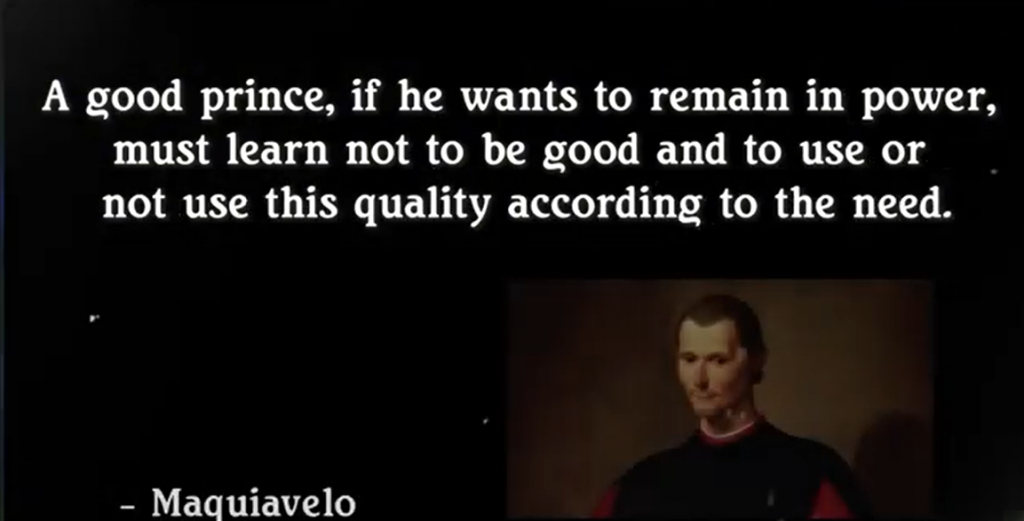
A few Diplomats understand this far better than most legal theorists. Diplomacy is not built on sentiment. It is built on calibrated pressure, mutual interest, and credible consequences. A state that relies only on being liked is quickly ignored. A state that relies only on fear becomes isolated. The balance is the craft.
From a legal perspective, particularly for my clients, the issue is sharper. The law often claims neutrality but operates through power. International law, for example, is frequently presented as a system of shared norms. In practice, it reflects enforcement imbalances:
- Strong states invoke law selectively
- Weak states rely on law defensively
- Enforcement mechanisms are uneven and often political
- Compliance is driven as much by fear of sanction as by respect for principle
Feminist legal theories have attempted to challenge this imbalance by emphasising care, relationality, and the critique of dominance structures. This is valuable. It exposes blind spots in traditional doctrine. However, the law often misjudges these theories in two ways:
- It reduces them to moral commentary rather than treating them as rigorous analytical frameworks; and,
- It adopts their language without altering underlying power dynamics.
This is not progress. It is a cosmetic adaptation.
⚖️ When Being Good Hurts You 🗳️- Video #machiavelli #brutaltruth #Закон
https://www.youtube.com/watch?v=dWVKTPqPOA8
You should be clear with yourselves and with your clients. Law without enforcement is theatre. Diplomacy without leverage is conversation. And appeals to love, fairness, or shared humanity, while admirable, do not replace institutional strength.
There is also a cultural dimension that cannot be ignored. African and European traditions both contain deep currents of communal responsibility and authority, yet they express the balance of love and fear differently. European legal systems often formalise authority through institutions, while many African traditions historically set authority within relational and communal structures. Neither is immune to misuse. Both demonstrate that love and fear are always intertwined, never pure.
A brief note on the popular “stop helping” genre. Books in this space, such as Stop Helping, The Prince, typically retail selectively depending on edition and format. Their core message is relevant here. Unbounded “helpfulness” in law or diplomacy can weaken your position if it is not paired with clarity and limits.
Let me be direct with my clients. I note the following:
- Do not promise fairness where there is none
- Do not confuse goodwill with enforceability
- Do not ignore power when interpreting the law
- Do not assume that moral arguments will prevail without strategic backing
Love without structure fails. Fear without legitimacy collapses. Your job is not to choose either one blindly. Your job is to understand how both operate and to use that understanding with precision.
Advocate: Pat Kaba
Code is Law for LPA 12-7-5-1 @07:07 on 14th April 2026
#atapama #kaba #atapama #kabawega #resintegra
https://www.kabawega.com/about-us
X
Love speaks softly, yet seldom binds,
Fear speaks once and governs minds.
Courts may write of rights and grace,
Yet power decides the final place.
Between the heart and guarded door,
We choose what law is really for.
X
Любовь тиха, но не всегда сильна,
Страх краток, но держит ума струна.
Законы пишут о правде и свете,
Но власть решает, кто прав в ответе.
Меж сердцем и страхом стоит судья,
И выбор там, где правда и игра.
XXX


One thought on “Love versus Fear: A Legal and Diplomatic Reckoning”