
Background
The Israel-Palestine conflict is complex and deeply rooted in history, religion, politics, and competing national aspirations.
Overview
Ancient History: The region known as Palestine has a rich history dating back thousands of years. It is considered the historical homeland of both Jews and Palestinians. The Jews have a historical connection to the land through biblical narratives, while Palestinians are descendants of various groups who have lived in the region for generations.
Ottoman Rule: From the early 16th century until World War I, Palestine was part of the Ottoman Empire. During this period, Jewish and Arab populations coexisted in the region.
British Mandate: After World War I, the League of Nations granted Britain the mandate to govern Palestine. This mandate laid the groundwork for later tensions as Britain navigated the interests of both Jewish and Arab populations.
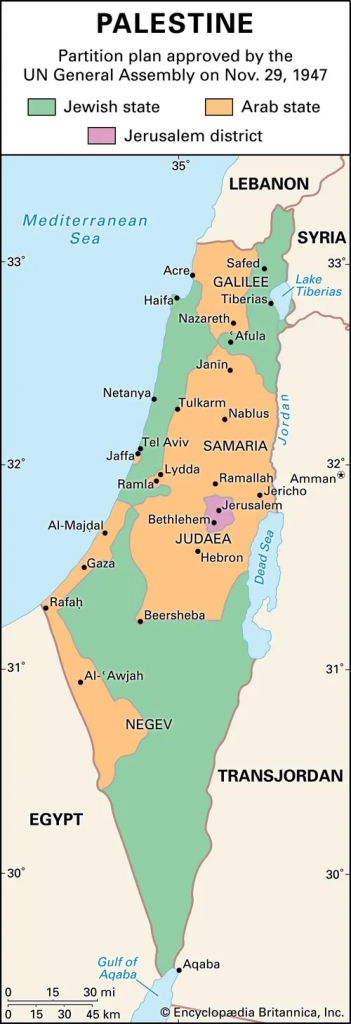
Post-World War II: Following the Holocaust and widespread persecution of Jews in Europe, international support grew for the establishment of a Jewish state. In 1947, the United Nations passed a resolution recommending the partition of Palestine into separate Jewish and Arab states, with Jerusalem as an international city. The plan was accepted by Jewish leaders but rejected by Arab leaders.
1948 Arab-Israeli War (War of Independence): On May 14, 1948, Israel declared its independence, leading to a war with neighboring Arab states. Israel emerged as an independent state, and a significant number of Palestinian Arabs became refugees as they fled or were expelled from their homes during the conflict.
Six-Day War (1967): In 1967, Israel fought a war against Egypt, Jordan, and Syria. Israel captured the West Bank (including East Jerusalem), Gaza Strip, Sinai Peninsula, and Golan Heights. The status of these territories remains a contentious issue.
Oslo Accords (1990s): The Oslo Accords were a series of agreements between Israel and the Palestine Liberation Organization (PLO) aimed at establishing a framework for Palestinian self-governance in parts of the West Bank and Gaza Strip. However, a final resolution on the status of these territories was not reached.
Conflict: The Israeli-Palestinian conflict has persisted for decades, marked by periods of violence, negotiations, and intermittent peace efforts. Key issues include borders, the status of Jerusalem, the right of return for Palestinian refugees, security concerns, and the establishment of a viable Palestinian state.
Currently: The conflict remains unresolved, with both Israelis and Palestinians continuing to lay claim to the same land. Negotiations have faltered, and violence has erupted periodically, including clashes between Israeli security forces and Palestinian militants.
The Israel-Palestine conflict is a deeply sensitive and complex issue, with deeply entrenched positions on both sides. International efforts continue to seek a peaceful resolution to this long-standing conflict, but a lasting solution remains elusive. It is a topic that involves many perspectives and narratives, making it essential to engage with a wide range of sources to gain a comprehensive understanding of the issue.
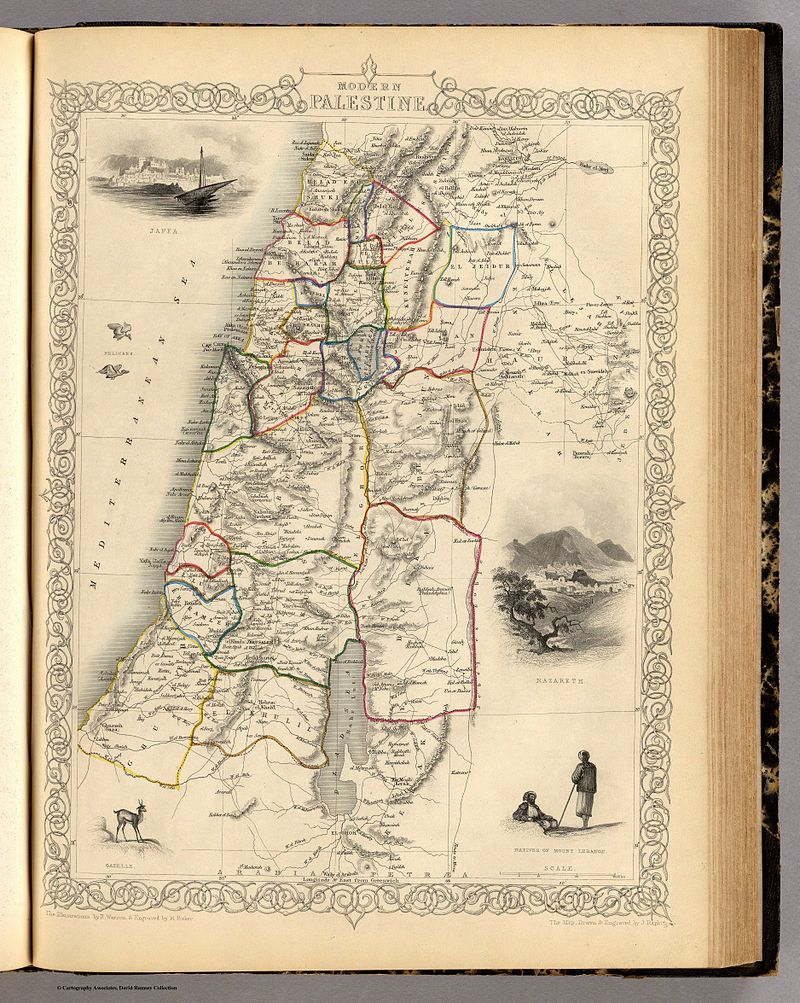
Strategically situated between three continents, the region of Palestine (also known as the Land of Israel and the Holy Land) has a tumultuous history as a crossroads for religion, culture, commerce, and politics. Palestine is the birthplace of Judaism and Christianity and has been controlled by many kingdoms and powers, including Ancient Egypt, Ancient Israel and Judah, the Persian Empire, Alexander the Great and his successors, the Hasmoneans, the Roman Empire, several Muslim caliphates, and the crusaders. In modern times, the area was ruled by the Ottoman Empire, then the United Kingdom and since 1948 it has been divided into Israel, the West Bank, and the Gaza Strip.
Zionism
Zionism is a movement to recreate a Jewish presence in Israel. The name comes from the word “Zion,” which is a Hebrew term that refers to Jerusalem.
Throughout history, Jews have considered certain areas in Israel sacred—as do Christians and Muslims. The Torah, the Jewish religious text, depicts stories of ancient prophets who were instructed by their God to return to this homeland.
While the fundamental philosophies of the Zionist movement have existed for hundreds of years, modern Zionism formally took root in the late 19th century. Around that time, Jews throughout the world faced growing anti-Semitism.
Some historians believe that an increasingly tense atmosphere between Jews and Europeans may have triggered the Zionism movement. In one 1894 incident, a Jewish officer in the French army named Alfred Dreyfus was falsely accused and convicted of treason. This event, which became known as the “Dreyfus Affair,” sparked outrage among Jewish people and many others.
Persecuted Jews who were struggling to salvage their identity began promoting the idea of returning to their homeland and restoring Jewish culture there.
When did Jewish immigration to historical Palestine begin?
An ancient community: There was already an indigenous Jewish population in Palestine during the Ottoman Empire and before. Its members were concentrated principally in the holy cities of Jerusalem, Safed, Tiberias, and Hebron. Nonetheless, the Jewish presence in Palestine, prior to the establishment of the State of Israel, had fluctuated through time, with various communities appearing and disappearing. In 1880, before immigration began, Palestine’s Jewish population numbered about 25,000 and had been deeply rooted there for several generations.
The beginning of Zionism and immigration: The beginning of modern, national-minded Jewish immigration coincides with the foundation of the modern Zionist movement. Zionism as a political movement is conventionally dated to 1882. Small groups of Jews dispersed throughout Europe began to cooperate to establish agricultural colonies in historical Palestine. These groups met officially for the first time in 1897, for the first Zionist conference, in Basel, Switzerland.
The first two waves of immigration took place under the Ottoman Empire. The first aliya, between 1882 and 1903, brought 20,000 to 30,000 Russians fleeing Czarist Russia’s pogroms. Between 1903 and 1914, during the second aliya, 35,000-40,000 more Russians, most of them socialists, established themselves in Palestine. The newcomers were very active in the building of Tel-Aviv and also founded kibbutzim (collective villages).
Marginal immigration: This immigration remained small relative to both the total Palestinian population and the other destinations of the migrants. In fact, on the eve of WWI, the 80,000 Jews of Palestine constituted only a tenth of the country’s total population. Moreover, Jewish immigration to Palestine constituted only 3 percent of the transoceanic Jewish migration during that period. By way of comparison, of the 2,367,000 Jews who left Europe, 2,022,000 established themselves in the US.
With WWI and the subsequent famine, Palestine’s total population dropped. Its Jewish community numbered only 60,000.
Why did Jewish immigration increase again after WWI?
Stronger immigration: The third and fourth aliyot brought 35,000 Jews from the Soviet Union, Poland, and the Baltic countries between 1919 and 1923, and 82,000 Jews from the Balkans and the Near Orient between 1924 and 1931, respectively. By the end of 1931, 174,600 Jews were living in Palestine, 17 percent of the population. During this period, 15 percent of the transoceanic Jewish migration was to Palestine. There were many reasons for this surge in migration.
Population of Palestine, 1872-1948

* The percentages indicate the proportion of the total population that was Jewish.
Sources: Scholch (1985) for the Arab population between 1872 and 1882. McCarthy (2001) for the Arab population between 1890 and 1948 and Gresh and Vidal (2011) for the figures on the Jewish population.
The Balfour Declaration: At the end of WWI, the Ottoman Empire was dismantled and Palestine came under the British mandate.
Great Britain was in favour of establishing a Jewish national homeland in Palestine.
In a letter written in 1917, Lord Balfour expressed this agreement, with the proviso that “… nothing shall be done which may prejudice the civil and religious rights of existing non-Jewish communities in Palestine …”. The Balfour Declaration gave a legal basis for Jewish immigration, thus encouraging it.
The rise of anti-Semitism and Nazism
The increase in anti-Semitism in Europe led many Jews to leave their countries. At the same time, the US Immigration Act of 1924 would greatly slow immigration from Europe by setting strict quotas per country. Diverse limitations on immigration were also implemented in Europe. This also explains in part Jewish migrants’ choice of Palestine. From 1932 on, with the Nazi victory in Germany and the intensification of persecution in Austria and Czechoslovakia, Jewish immigration to Palestine increased dramatically. Between 1932 and 1939, Palestine absorbed 247,000 newcomers, 46 percent of Jewish emigration from Europe. In the European political context, this fifth aliya constituted a flight rather than a “Zionist choice.”
Theodor Herzl
Modern Zionism was officially established as a political organization by Theodor Herzl in 1897. A Jewish journalist and political activist from Austria, Herzl believed that the Jewish population couldn’t survive if it didn’t have a nation of its own.
After the Dreyfus Affair, Herzl wrote Der Judenstaat (The Jewish State), a pamphlet that called for political recognition of a Jewish homeland in the area then known as Palestine.
In 1897, Herzl organized the First Zionist Congress, which met in Basel, Switzerland. He also formed and became the first president of the World Zionist Organization.
Although Herzl died in 1904 – years before Israel was officially declared a state – he is often considered the father of modern Zionism.
The Balfour Declaration
In 1917, British Foreign Secretary Arthur James Balfour wrote a letter to Baron Rothschild, a wealthy and prominent leader in the British Jewish community.
In the brief correspondence, Balfour expressed the British government’s support for the establishment of a Jewish home in Palestine. This letter was published in the press one week later and eventually became known as the “Balfour Declaration.”
The text was included in the Mandate for Palestine – a document issued by the League of Nations in 1923 that gave Great Britain the responsibility of establishing a Jewish national homeland in British-controlled Palestine.
Two well-known Zionists, Chaim Weizmann and Nahum Sokolow, played important roles in obtaining the Balfour Declaration.
Zionism and World War II
Many Jews living in Russia and Europe suffered horrific persecution and death during Russian pogroms and under Nazi rule. Most historians estimate that about 6 million Jews were killed in Europe during the Holocaust.
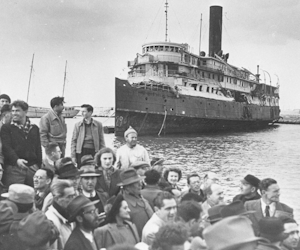
In the years before and during World War II, thousands of European Jews fled to Palestine or other regions to escape hostility. After the Holocaust ended, Zionist leaders actively promoted the idea of an independent Jewish nation.
With the end of Great Britain’s mandate in Palestine and the British army’s withdrawal, Israel was officially declared an independent state on May 14, 1948.
Jewish Resettlement in Israel
The rise of Zionism led to massive Jewish immigration into Israel. About 35,000 Jews relocated to the area between 1882 and 1903. Another 40,000 made their way to the homeland between 1904 and 1914.
Most Jews—about 57 percent of them—lived in Europe in 1939. However, by the end of World War II, only about 35 percent of the Jewish population still resided in European countries.
In 1949, more than 249,000 Jewish settlers moved to Israel. This was the largest number of immigrants to arrive in a single year.
The Jewish population in Israel increased from about 500,000 in 1945 to 5.6 million in 2010. Today, around 43 percent of the world’s Jews live in Israel.
The Current State of Zionism
Since it started more than 120 years ago, Zionism has evolved, and different ideologies—political, religious, and cultural—within the Zionist movement have emerged.
Many self-proclaimed Zionists disagree with each other about fundamental principles. Some followers of Zionism are devoutly religious while others are more secular.
“Zionist lefts” typically want a less religious government and support giving up some Israeli-controlled land in exchange for peace with Arab nations. “Zionist rights” defend their rights to land and prefer a government based strongly on Jewish religious traditions.
Advocates of the Zionist movement see it as an important effort to offer refuge to persecuted minorities and reestablish settlements in Israel. Critics, however, say it’s an extreme ideology that discriminates against non-Jews.
For example, under Israel’s 1950 Law of Return, Jews born anywhere in the world have the right to become Israeli citizens, while other people aren’t granted this privilege.
Arabs and Palestinians living in and around Israel typically oppose Zionism. Many international Jews also disapprove of the movement because they don’t believe a national homeland is essential to their religion.
While this controversial movement continues to face criticism and challenges, there’s no denying that Zionism has successfully bolstered the Jewish population in Israel.
Sources
What is Zionism?: Vox Media.
History of Zionism: ReformJudiasm.org.
What is Zionism?: ProCon.org.
Israel Studies An Anthology: The History of Zionism: Jewish Virtual Library.
British Palestine Mandate: History and Overview: Jewish Virtual Library.
Mandatory Palestine: What It Was and Why It Matters: TIME.
The continuing decline of Europe’s Jewish population: Pew Research Center.
Is a Left Zionism Possible?: Dissent.
Patrick Bet-David, Jimmy Dore, Tim Pool, Adam Sosnick, and Vincent Oshana react to Hilary Clinton’s shocking statement about Trump supporters.
Israel, Palestine, Russia, Ukraine, USA.
Mandela Effect

@riley6740
I’m very happy to hear that we are starting to realize everything these guys are speaking about. I’ve been saying this since 1981. It’s only gotten worse since. The issue is that the younger generations have not been taught common sense. Logic dictates that we have slowly given up the Constitution for what the government says we need. We’ve given up our rights to one regulation at a time. Congress has given their jobs to other agencies to do what the constitution says is their duty to do.
xxx
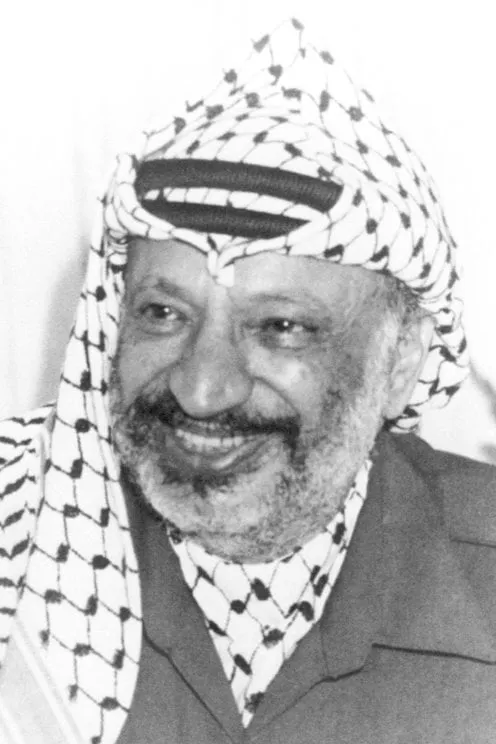
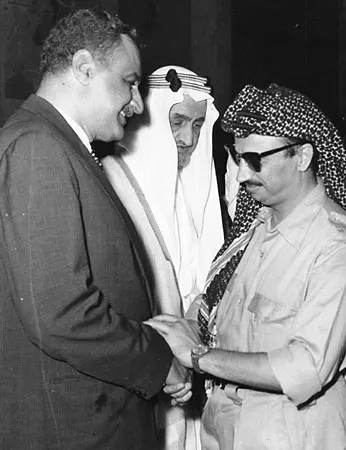
Yasser Arafat, also known as Mohammed Abdel Rahman Abdel Raouf Arafat al-Qudwa al-Husseini, was a Palestinian political leader who served as the first president of the Palestinian Authority from 1996 to 2004. He was also the chairman of the Palestinian Liberation Organization (PLO) and the leader of Fatah. In 1993, he led the PLO to a historic peace agreement with Israeli Prime Minister Yitzhak Rabin and the Israeli government. Arafat passed away on November 11, 2004, in Paris, France.

Benjamin “Bibi” Netanyahu (Hebrew: בִּנְיָמִין נְתַנְיָהוּ; born 21 October 1949) is an Israeli politician who has been serving as the Prime Minister of Israel since December 2022, having previously held the office from 1996 to 1999 and again from 2009 to 2021. He is the chairman of the Likud party. Netanyahu is the longest-tenured prime minister in the country’s history, having served for a total of over 16 years. He was also the first prime minister to be born in Israel after its Declaration of Independence.
Born in Tel Aviv to secular Jewish parents, Netanyahu was raised both in Jerusalem and for a time in Philadelphia, in the United States.
xxx
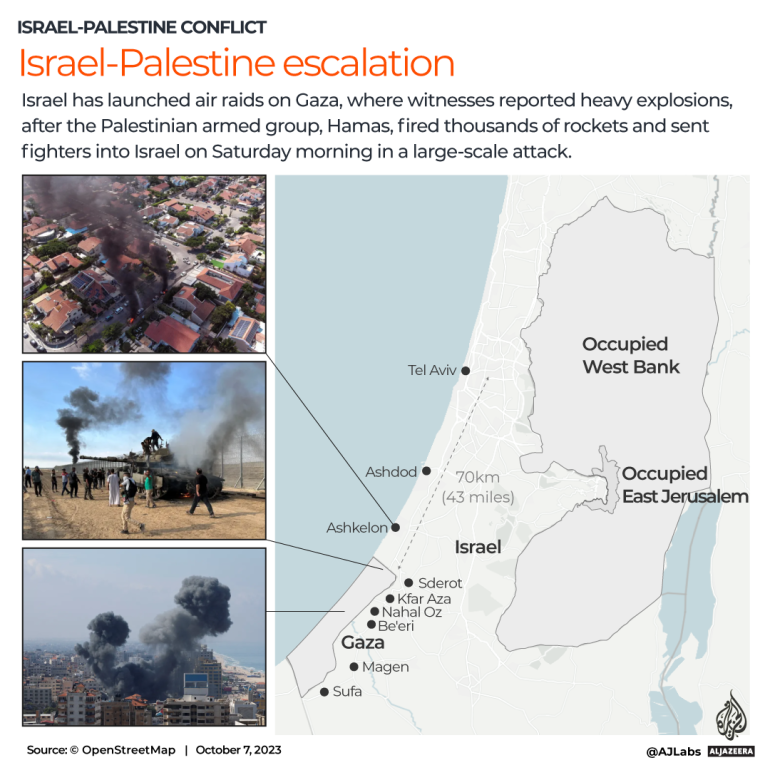
7th-8th October 2023
Why did the Palestinian group Hamas land in Israel? All you need to know.

Watch Israeli PM Talking About Jewish History. How many of you Think it’s True?

🚨Watch Israeli PM Talking About Jewish History.
— Truth News 🗞️ (@Truth4News) October 14, 2023
How many of you Think it's True 🤔#Gazagenocide #hamas #HamasWarCrimes #Netanjahu #Israel #Historia #jew #Muslim #palastine #palastine #Isarael #HamasTerrorist #Gaza
pic.twitter.com/WjmVxnXxl9
xxx
https://www.youtube.com/watch?v=N6_GDDa4bmI
xxx



One thought on “Global Politics vs. War 🇮🇱 🇵🇸 Palestine ❤ Israel”