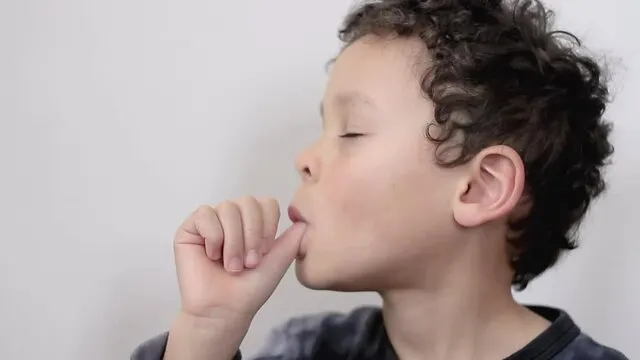
Thumb sucking is a natural, self-soothing behavior found in humans and other primates, serving as a primary mechanism for infants to regulate stress and seek comfort. While the reflexive sucking action is present at birth and often begins in utero, it typically evolves into a voluntary habit that most children outgrow between ages 2 and 4. Medical professionals generally do not intervene unless the habit persists beyond age 4 or 5, as early-stage sucking is considered a normal developmental phase that helps children cope with fatigue, anxiety, or boredom.

The primary concern with prolonged thumb sucking is dental and structural malocclusion. Chronic, high-intensity sucking can exert pressure on the developing jaw, leading to an anterior open bite, increased overjet, posterior crossbite, and a narrowed upper arch. These issues arise because the thumb displaces the tongue and pushes against the front teeth, disrupting normal oral equilibrium. If the habit stops before permanent teeth erupt (typically around age 6), these dental changes are often reversible without orthodontic intervention; however, persistence into later childhood may require braces or habit-breaking appliances to correct alignment.
Causes and Development of Thumb Sucking
Thumb sucking is a natural, biologically driven reflex present in many infants, often beginning in utero as early as 29 weeks of gestation. It serves as a primary self-soothing mechanism, helping infants and toddlers manage stress, fatigue, boredom, or anxiety. This behavior is considered a normal part of early development and is nearly universal among healthy newborns. Both genetic and environmental factors contribute to the habit, with studies showing higher concordance in monozygotic twins compared to dizygotic twins, indicating a hereditary component.
The act of sucking stimulates the release of oxytocin, promoting a sense of well-being and stress reduction. While most children naturally discontinue the habit between the ages of 2 and 4, persistence beyond this period – especially past age 5 or 6 -can lead to significant consequences, particularly as permanent teeth begin to erupt.
Breaking the habit is most effective when approached with positive reinforcement rather than punishment. Strategies include praising the child for periods without sucking, using bitter-tasting nail polishes (though less favored by some dental associations), or employing orthodontic appliances like TGuards for resistant cases. Addressing the underlying cause, such as anxiety or boredom, is crucial; for instance, providing alternative comfort objects or engaging the child in activities that keep their hands busy can significantly reduce the urge. Social stigma and peer teasing often serve as strong motivators for older children to stop voluntarily, making gentle parental guidance more effective than strict prohibitions.
Long-Term Effects on Oral Health and Development
Prolonged and intense thumb sucking can exert abnormal mechanical forces on the developing oral structures, leading to various dental and skeletal changes. The severity of these effects is directly related to the frequency, intensity, and duration of the habit.
Key dental consequences include:
- Malocclusion: Misalignment of the teeth, most commonly an anterior open bite (where the front teeth do not meet when the mouth is closed) and an increased overjet (protruding upper front teeth, often called “buck teeth”).
- Posterior crossbite: A narrowing of the upper jaw can cause the upper back teeth to fit inside the lower back teeth.
- Palatal changes: The constant pressure can alter the shape of the palate (roof of the mouth), making it higher and narrower, which can also affect breathing.
These changes are often reversible if the habit stops before the permanent teeth fully erupt. However, if thumb sucking continues, it may necessitate future orthodontic treatment, such as braces or other appliances, to correct the alignment.
Psychological and Social Implications
Beyond physical effects, persistent thumb sucking can have psychological and social ramifications. Children who continue the habit into their school years may face teasing or ridicule from peers, which can lead to low self-esteem, social anxiety, and withdrawal.
In rare cases, the cessation of thumb sucking has been linked to the emergence of other stress-related behaviors, such as nocturnal bed-wetting, a phenomenon known as symptom substitution, highlighting the importance of addressing the underlying emotional needs.
The habit can become a source of conflict at home if parents/guardians respond with frequent reprimands or nagging, potentially increasing the child’s stress and reinforcing the behavior.
Symptom substitution is the phenomenon where treating a specific psychological or behavioral symptom without addressing the underlying emotional conflict or unmet need leads to the emergence of a new, different symptom. While historically rooted in Freudian theory, modern clinical perspectives view it as a result of coping with distress through maladaptive behaviors.
Addressing underlying emotional needs is critical because symptoms often serve a function, such as numbing painful emotions or managing anxiety. For example, if an individual uses eating disorders or substance abuse to cope with emotional distress, focusing solely on stopping the eating disorder may cause urges to self-harm or use substances to increase. Long-lasting recovery requires treating the root cause – such as learning to tolerate emotional distress – rather than just suppressing individual symptoms.
Examples of this dynamic include:
- Co-occurring Disorders: Patients with eating disorders and substance use issues may see one behavior worsen if treatment only targets the other, as both serve to manage underlying emotional pain.
- Physical Manifestations: Unmet emotional needs or trauma can manifest as physical symptoms like chronic pain, fibromyalgia, or gastrointestinal issues, which may alleviate when emotional expression and support are provided.
- Compensatory Behaviors: In psychological need theory, unmet basic needs (like autonomy or safety) can lead to need substitutes, such as an excessive desire for security or power, which act as compensatory responses to underlying frustration.
Fibromyalgia is a chronic disorder characterized by widespread pain, fatigue, and sleep disturbances, affecting an estimated 2% to 4% of the population, with a higher prevalence in women. The condition is considered a central sensitivity syndrome, where the brain and spinal cord process pain signals abnormally, leading to heightened pain sensitivity without visible tissue damage or abnormalities on standard blood tests or X-rays.
Symptoms typically include a constant dull ache lasting at least three months, fatigue that does not improve with rest, and cognitive issues known as “fibro fog.” Diagnosis is based on symptom history and severity, after ruling out other conditions such as rheumatoid arthritis or lupus, as there is no specific diagnostic test. Treatment focuses on symptom management through a combination of medications (such as duloxetine, milnacipran, or pregabalin), aerobic exercise, improved sleep hygiene, and cognitive behavioral therapy.
Holistic approaches that integrate emotional support, narrative nursing, and cognitive-behavioral techniques help patients identify and meet these core needs, preventing the cycle of symptom substitution.
X