The Rise of AI Companies: A Glimpse at the Tech Giants’ Performance
Over the past year, several major players in the tech industry have witnessed significant growth, particularly driven by the AI boom. Companies like NVIDIA, AMD, Broadcom, Amazon, CoreWeave, Microsoft, and OpenAI have capitalised on the growing demand for AI infrastructure, software, and services, reaping immense profits and seeing their stocks surge.
Is the AI Bubble About to Burst? Bill Gurley on Smart Investing | Tim Ferriss Podcast
Lopnet li AI-puzir? Bill Gurley o umnykh investitsiyakh | Tim Ferriss Podcast. Legendary investor Bill Gurley, General Partner at Benchmark, joins Tim Ferriss to break down the AI bubble, venture capital cycles, and how smart investors think during hype-driven markets. From AI investments and tech valuations to career longevity and lessons from Gurley’s new book Runnin’ Down a Dream, this conversation is essential for founders, investors, and anyone navigating the future of technology and finance.
SPV stands for Special Purpose Vehicle, which is a legal entity created by a parent company to isolate financial risks and manage specific financial transactions. SPVs are often used to undertake risky projects without exposing the parent company’s assets to potential losses.
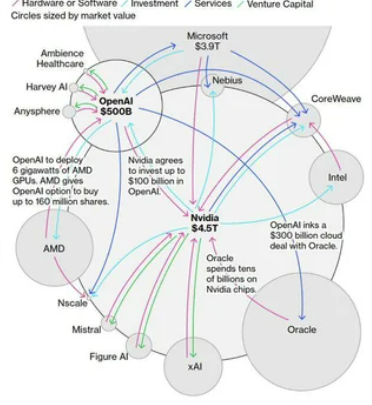

- NVIDIA has been at the forefront of this revolution, with their graphics processing units (GPUs) becoming a backbone for AI development. Their stock price has more than doubled in the past year, making them one of the most valuable tech companies in the world.
- AMD and Broadcom have followed closely behind, benefiting from increased demand for semiconductor chips, especially as cloud computing and AI infrastructure expand globally.
- Amazon continues to dominate the e-commerce sector, but its cloud computing arm, AWS, has also seen growth in the AI space, contributing to its record profits.
- CoreWeave, a newer entrant into the AI scene, has experienced explosive growth as a cloud provider, particularly for AI workloads, drawing attention from investors seeking the next big thing in tech.
- Microsoft, a long-standing player in the tech space, has strategically invested in OpenAI, which has propelled both its Azure cloud services and AI capabilities forward.
- OpenAI, the creator of tools like ChatGPT, has revolutionised the AI sector, gaining immense attention and funding in a relatively short time.
These companies have capitalised on the AI boom, but their skyrocketing valuations raise questions about sustainability.
A Growing Concern: Is History Repeating Itself?
Millennials and Gen Z, who lived through the 2008 financial collapse, are understandably cautious about the current economic situation. Many remember the panic and fallout caused by the subprime mortgage crisis and the subsequent government bailouts of companies like Lehman Brothers and the too-big-to-fail banks. Now, there’s a growing fear that the same could happen again, but this time with AI companies.
The rise of AI has sparked an investment frenzy, with billions flowing into tech companies claiming to be on the cutting edge of artificial intelligence. But here’s the catch: much of the investment in AI has been speculative. Investors, eager to cash in on the next big thing, are putting their money into companies that haven’t yet proven they can generate sustainable profits, much like the tech bubble of the late ’90s.
The concept of “AI Slop” – a term used to describe the flood of poorly thought-out AI ventures – is becoming more common. Just as the dot-com bubble was inflated by a rush of investment into tech companies with little substance or profitability, the current AI boom is ripe for a similar crash.
The Economic Downturn and the AI Bubble
A surge in valuations does not necessarily equate to long-term success. We saw this during the dot-com bubble of the late ’90s and early 2000s when tech stocks soared to unrealistic heights only to crash when investors realised that many companies had little to show for their inflated valuations. In 2008, the Global Financial Crisis (GFC) hit, resulting in massive economic turmoil, layoffs, and taxpayer bailouts for the largest financial institutions.
Today, some are wondering whether the AI bubble might be the catalyst for a similar collapse. Investors are pouring money into AI startups, but much like the tech companies of the past, many of these AI companies lack profitability or clear business models. As a result, the current surge in AI stocks could be short-lived, leaving taxpayers and ordinary workers to foot the bill if and when these companies collapse.
The NASDAQ index, which tracks tech stocks, has seen significant gains recently, largely fueled by the hype surrounding AI. But as the market becomes more volatile and investors realize the shaky foundations underlying many of these companies, a crash could be imminent.
Taxpayer Money and Potential Bailouts: A Worrying Trend
Much like the bailouts during the 2008 crisis, there is growing concern that AI companies may end up seeking government funding if they face financial trouble. The idea that taxpayers might be asked to bail out tech companies that have been overvalued and unable to deliver on their promises is a troubling prospect.
While some argue that AI has the potential to revolutionise industries and bring long-term benefits, others believe the sector is overhyped and may not live up to the sky-high expectations. The growing reliance on government intervention to prop up failing companies is a point of concern for many millennials who have witnessed firsthand the economic instability caused by such actions.
Is the AI Boom Really Just a Tech Bubble?
In the rush to embrace AI, many companies are making bold promises about the future, but not all of them will succeed. The reality is that the AI space is still in its infancy, and while certain companies like OpenAI and NVIDIA are leading the charge, many others will fall by the wayside as the market matures.
The question remains: Are we headed for another tech bubble? Will AI companies become the next Lehman Brothers? Only time will tell, but with the overhyped valuations, speculative investments, and economic uncertainty, there are plenty of signs that the AI bubble may burst just like the dot-com bubble before it.
The AI Bubble is Bursting… Here’s How to Profit From It
Everyone is chasing the shiny AI apps… but almost nobody is looking at the real money machine behind this boom: the unsexy picks-and-shovels businesses powering the entire AI economy. In this video, I break down the six tiers of AI, from chips to data centres to AI native startups, and show you where the real opportunities are if you’re not a coder, not a VC, and not trying to build the next ChatGPT.
Large Language Models are one type of AI algorithm. There are many more, each with different applications. For example, Diffusion Models deal with images instead of text. These algorithms are specialised for specific purposes, so they’re known as Artificial Narrow Intelligence (A.N.I.) to distinguish them from Artificial General Intelligence (A.G.I.), which currently only exists in Science Fiction, such as HAL 9000 from 2001.
These are Narrow Intelligence as Artificial Intelligence (A.I.) has levels, and AGI (real A.I.) is at level 4, ChatGPT is level 2-3 at best, so technically not A.I.
Caution in the Age of AI
As we witness the rapid rise of AI companies, it is crucial to remain cautious and remember the lessons of the past. The speculative nature of the tech industry, coupled with the promise of AI, could lead to an inevitable correction. Whether we are heading for another economic collapse or simply experiencing growing pains in the tech sector, one thing is certain: the future of AI will be shaped by both the successes and failures of the companies leading the charge.
As investors and consumers, we must ask ourselves: Are we investing in real innovation, or are we just riding the hype of the latest tech bubble?
Key Notes
- AI Bubble
- 2008 Financial Collapse
- Dot-com Bubble
- Tech Bubble
- Global Financial Crisis
- OpenAI
- NVIDIA Stock Surge
- AI Companies Seeking Bailouts
- Economic Downturn and AI
- AI Slop
- NASDAQ Tech Surge
X-X-X