Border Control. Immigration Legal System. Abide by Law. Does the Law Matter?
Germany 🇩🇪 and Russia 🇷🇺 want to drink Dom Pérignon French vintage Champagne vs. whilst they want Poland 🇵🇱 to drink water. 🤣🤣🤣
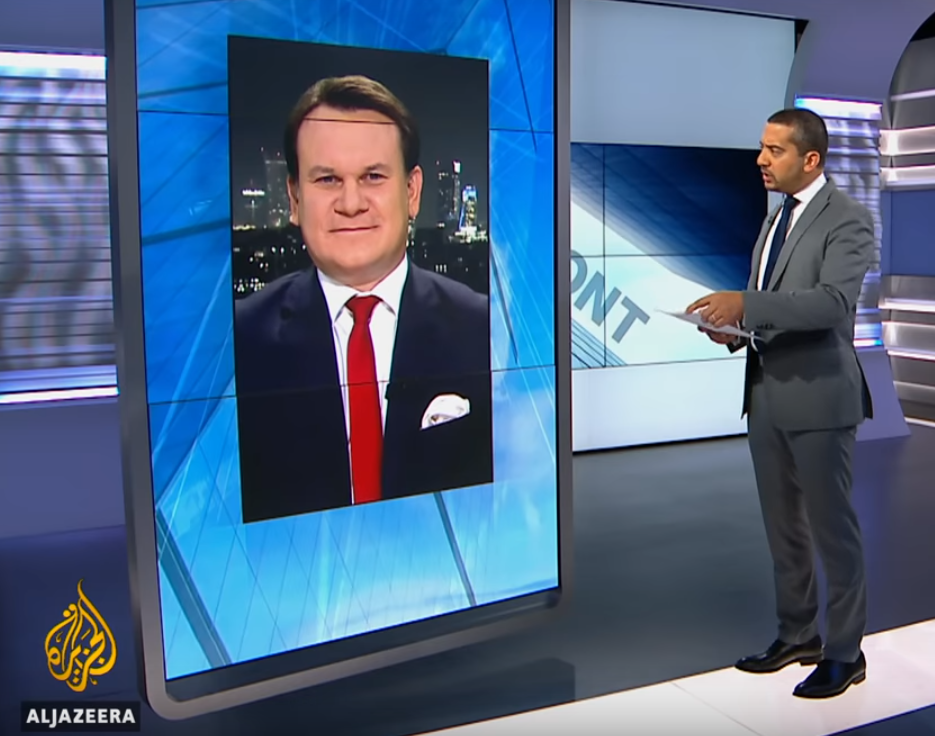
Dominik Tarczyński (born 27th March 1979, in Lublin) is a Polish politician and journalist.
Member of the European Parliament (MEP) since 2020 – Law and Justice (PiS)
Law and Justice (Polish: Prawo i Sprawiedliwość[ˈpravɔ i spravjɛˈdlivɔɕt͡ɕ]ⓘ, PiS) is popularly (mis)identified in the media as right-wing populist and national-conservative political party in Poland.
Its chairman is Jarosław Kaczyński. It is the dominant party in Poland.
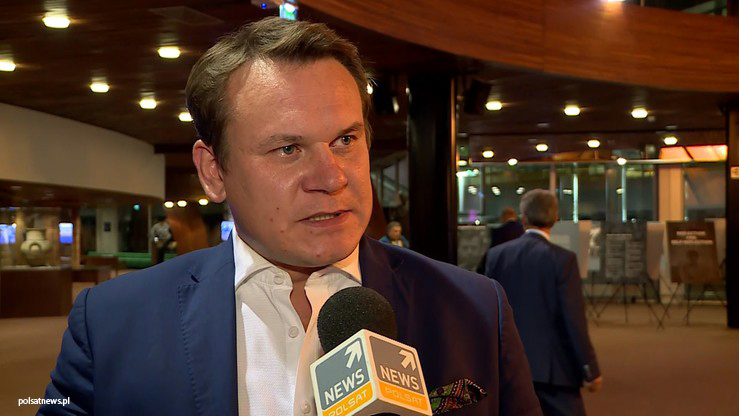
Immigration patriot Dominik Tarczyński vs. Public enemy no. 1 for liberals in Poland?
Germany 🇩🇪 and Russia 🇷🇺 want to drink Dom Pérignon French vintage Champagne vs. whilst they want Poland 🇵🇱 to drink water. 🤣🤣🤣
Dom Pérignon (/ˌdɒm pɛrɪnˈjɒn/ DOM perr-in-YON, French: [dɔ̃ peʁiɲɔ̃]) is a brand of vintage Champagne.
Despite the criticism from Poland’s left-wing press, Tarczysnski has said before that he will not apologize for protecting Poland’s borders, telling Al Jazeera that the Polish government promised to never accept any migrant quotas, a promise the government has kept.
“So we have a right to think about our future in the way we want to,” Tarczynski said during an interview. “So, Christian culture, Roman law, Greek philosophers. These are the virtues for us. That’s number one. Number two: we do not want sharia law in Europe.”
Member of European Parliament Dominik Tarczyński
===
Law vs. Compassion
===
Poland emphasizes security for its citizens
For Tarczynski, security is just as important as culture. Countries that have pursued multiculturalism like the U.S., the United Kingdom, France, and Germany are beset with Islamic terrorist attacks that have killed hundreds in addition to dozens of attacks that have been foiled.
“If you want to be a refugee, you have to flee to the first safe country, a neighbouring country. Then, you have to apply, you have to prove who you are and now we are having people in Europe,” said Tarczynski. “Poland is not a neighbor of Syria. We have documents or passports with the same picture and different names. That’s just a fact from our interior minister. So, it’s all about safety.”
Tarczynski pointed to the disproportionate amount of terrorist attacks in Europe committed by Muslims as a major factor behind Poland’s immigration policies.
November 2019
Al Jazeera is owned and funded by the government of Qatar, an absolute monarchy ruled by the Al Thani dynasty since the 19th century. The country and many others in the Middle East adhere to repressive sharia law, which guides Qatar’s constitution and all of its legislation.
During the interview, Tarczynski directed his criticism of countries like Qatar which failed to take in migrants of the same religion and culture from neighboring countries.
“It has nothing to do with your color,” said Tarczynski. “It is a problem mainly of Muslims coming to Europe, I am surprised they are not going to Saudi Arabia, Qatar, or any other rich Muslim countries.”
Richest Middle Eastern countries turn their backs on refugees
Tarczynski is not the only one raising criticisms over the richest Muslim countries refusing to take in refugees.
The executive director of Human Rights Watch, Kenneth Roth, publically embarrassed Gulf states in 2015 when he captioned a Twitter post with a photo of two crowded migrant boats, saying, “Guess how many of these Syrian refugees Saudi Arabia & other Gulf states offered to take? Zero.”
While some Gulf countries have provided funding for Syrian refugees, including for their efforts to reach Europe, these countries have been far less accommodating to refugees who want to settle on their soil. Amnesty International, echoing criticisms from Human Rights Watch, issued a report that said:
“Gulf countries including Qatar, United Arab Emirates, Saudi Arabia, Kuwait, and Bahrain have offered zero resettlement places to Syrian refugees.”
Dominik Tarczyński. Poland MEP.
===
History of Poland Politics
Poland is a country in Europe, and it has its own government and leaders. Polish politics is all about how the people of Poland choose their leaders and make decisions for their country.
In the past, Poland was a big and strong country, but it faced many challenges. Sometimes, other countries tried to take over Poland, and this caused a lot of problems. But the Polish people always wanted to have their own country and make their own rules. Poland did not always have its own government because it was divided or controlled by other countries. However, in 1918, after World War I, Poland became an independent country again, and they were very happy about it. They had their own leaders and made their own laws.
During World War II, Poland was invaded and occupied by Germany and the Soviet Union (USSR/Russia). This was a very tough time for the Polish people, and after the war, they worked hard to rebuild their country and have their own government once more.
Today, Poland has a government with a president and a parliament. People in Poland vote to choose their leaders, and they can have different political parties. At times, the politics in Poland can be a little complicated, but the important thing is that the Polish people have the freedom to decide what is best for their country.
Migration History in Poland
Highlights of the 20th Century
- World War I: Poland regained its independence in 1918 after World War I, leading to population shifts and migrations.
- World War II: During World War II, Poland faced occupation by Nazi Germany and the Soviet Union (USSR/Russia). This period saw mass displacements, forced labour, and the Holocaust, resulting in significant loss of life and displacement of populations.
- Post-WWII: After the war, borders in Eastern Europe were redrawn, and many Poles were displaced from their homes. Poland’s borders shifted westward, and it absorbed territories that were previously part of Germany. This period saw population exchanges between Poland and its neighbors.
Overview of Poland’s migration history and politics
- Pre-20th Century: Before the 20th century, Poland was a multicultural and multi-ethnic country. It was home to various ethnic and religious groups, including Poles, Jews, Ukrainians, Belarusians, and others. There was a significant Jewish population in Poland, particularly in cities like Warsaw and Krakow.
- 20th Century: The 20th century brought significant changes to Poland’s demographics due to various historical events:
- Communist Era: During the Communist era (1945-1989), Poland had strict control over its borders, and emigration was limited. The government controlled migration and Poles were not allowed to travel freely to Western countries.
- Post-Communism: With the fall of communism in 1989, Poland transitioned to a democratic system. The fall of the Berlin Wall (German: Mauerfall) on 9th November 1989, during the Peaceful Revolution, was a pivotal event in world history that marked the destruction of the Berlin Wall and the figurative Iron Curtain. This era brought greater freedom of movement for Poles, and many sought opportunities in Western Europe and North America. Emigration from Poland increased significantly.
- European Union Accession: Poland became a member of the European Union (EU) in 2004. This facilitated labour migration within the EU, with many Poles seeking employment in Western European countries.
- Recent Migration Issues: In recent years, Poland, like many European countries, has faced debates and policy changes related to immigration and refugees. While Poland has historically been a country of emigration, it has seen an increase in immigration, particularly from Ukraine and other neighboring countries, due to economic opportunities.
- Poland’s approach to migration politics: This has evolved over time, influenced by historical events, changes in government, and its integration into the European Union. It is important to note that migration policies and attitudes toward migrants can vary among different political parties and governments in Poland, and these policies continue to be a topic of debate and discussion within the country and the broader European context.
===