Introduction
The twenty-first century has witnessed increasing calls to decolonise international law and global governance. While international legal institutions frequently present themselves as neutral and universal, feminist scholars have demonstrated that law often reflects historically embedded structures of power. These structures are shaped not only by gender hierarchies but also by colonial legacies that continue to influence contemporary diplomatic relations, legal norms, and international institutions.
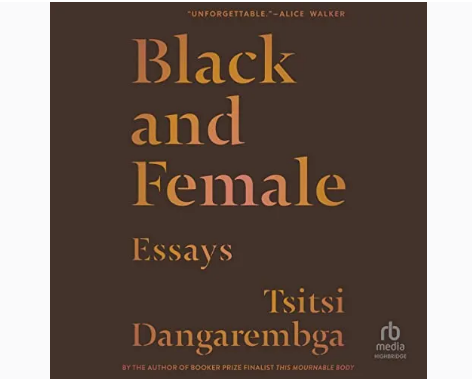
Drawing inspiration from African feminist thinkers such as Tsitsi Dangarembga, this article examines how feminist legal theories can contribute to a critical understanding of international law and diplomacy. Through a Kenyan-British perspective situated within Poland and the broader European context, the article explores the connections of race, gender, colonial history, and legal authority.
Feminist Legal Theory and the Question of Power
Feminist legal theory emerged as a critique of legal systems that claimed neutrality while reproducing gender inequality. Early feminist scholars challenged the assumption that law operates independently of social and political structures. Instead, they argued that legal institutions often privilege masculine experiences and perspectives.
Contemporary feminist legal theory has expanded beyond gender alone. Intersectional approaches demonstrate that women experience law differently depending on race, ethnicity, nationality, class, and migration status. This shift has been particularly significant for African and postcolonial feminists, who argue that mainstream legal frameworks frequently overlook the historical realities of colonialism.
The result is a more nuanced understanding of law as a site where multiple forms of power converge.
Colonial Legacies in International Law
International law developed alongside European imperial expansion. Concepts such as sovereignty, civilisation, territorial administration, and international governance were often constructed in ways that legitimised colonial rule.
Although formal colonialism has ended, many scholars argue that contemporary international institutions continue to reflect these historical foundations. Global governance structures frequently privilege knowledge produced in the Global North while marginalising African, Indigenous, and other non-Western perspectives.
From this standpoint, decolonisation is not merely a historical process but an ongoing legal and political project.
African Feminist Perspectives on Global Governance
African feminist scholarship contributes a distinctive perspective to debates on international law. Rather than treating gender inequality as separate from race or colonial history, African feminists emphasise the interconnected nature of oppression.
Writers such as Tsitsi Dangarembga illustrate how colonial systems shaped both public institutions and personal identities. Their work reveals how legal categories, social norms, and political structures continue to influence the lived experiences of African women.
This perspective challenges international law to move beyond formal equality and towards substantive justice that addresses historical inequalities.
Diplomacy Through a Kenyan-British Lens
A Kenyan-British perspective offers a unique vantage point from which to examine diplomacy. It reflects experiences that traverse African, British, and European political spaces while engaging with multiple legal traditions.
Such a perspective reveals the complexities of representation in international forums. Diplomats, scholars, and policymakers frequently navigate competing narratives concerning development, migration, security, and human rights.
The challenge is not simply to include more diverse voices within existing structures but to reconsider the assumptions that underpin those structures. Feminist diplomacy therefore becomes a transformative project rather than a representational one.
Poland and the Contemporary European Context
Poland provides an important site for examining the interaction between international law, European integration, and evolving debates about identity and rights. As Europe becomes increasingly diverse, questions of race, migration, citizenship, and belonging have become central to legal and political discourse.
For African scholars and practitioners working within Poland, these debates illuminate broader tensions between universal legal principles and local political realities. They also highlight the importance of comparative approaches that connect Eastern European experiences with postcolonial critiques from Africa and the Global South.
Towards a Decolonial Feminist Diplomacy
A decolonial feminist approach to diplomacy seeks to challenge inherited hierarchies while creating more inclusive forms of international engagement. It recognises that legal norms are neither politically neutral nor historically detached.
Instead, law and diplomacy should be understood as dynamic processes shaped by historical memory, cultural difference, and struggles for recognition. By incorporating African feminist perspectives into discussions of international law, scholars can contribute to more equitable forms of global governance.
Conclusion
The future of international law depends upon its ability to engage critically with its own history. Feminist legal theories, particularly those informed by African and postcolonial perspectives, provide valuable tools for this task.
Through a Kenyan-British perspective situated within Poland, it becomes possible to explore how race, gender, colonial history, and diplomacy join in contemporary legal practice. Such an approach moves beyond inclusion towards transformation, advancing a vision of international law that is genuinely plural, reflective, and just.
X