Alzheimer’s disease is the most common cause of dementia in the UK.
World Alzheimer’s Day is celebrated every year on September 21 to raise awareness and challenge the stigma around Alzheimer’s disease and other types of dementia. The day was established in 1994 to mark the tenth anniversary of Alzheimer’s Disease International (ADI), an organization dedicated to helping individuals with Alzheimer’s disease and their families.
===
Dementia is the name for a group of symptoms associated with an ongoing decline of brain functioning. It can affect memory, thinking skills, and other mental abilities.
The exact cause of Alzheimer’s disease is not yet fully understood, although a number of things are thought to increase your risk of developing the condition.
Dementia
These include:
- increasing age
- a family history of the condition
- untreated depression, although depression can also be one of the symptoms of Alzheimer’s disease
- lifestyle factors and conditions associated with cardiovascular disease
Read more about the causes of Alzheimer’s disease.
What is Alzheimer’s?
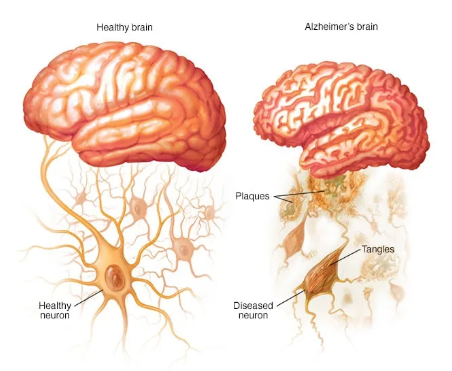
Alzheimer’s disease is a progressive, degenerative disease of the brain, in which the build-up of abnormal proteins causes nerve cells to die.
This disrupts the transmitters that carry messages and causes the brain to shrink.
More than 5 million people suffer from the disease in the US, where it is the 6th leading cause of death, and more than 1 million Britons have it.
WHAT HAPPENS?
As brain cells die, the functions they provide are lost.
That includes memory, orientation, and the ability to think and reason.
The progress of the disease is slow and gradual.
On average, patients live five to seven years after diagnosis, but some may live for ten to 15 years.
EARLY SYMPTOMS:
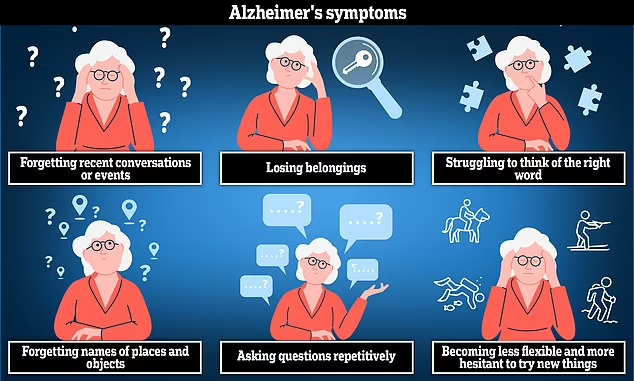
- Loss of short-term memory
- Disorientation
- Behavioral changes
- Mood swings
- Difficulties dealing with money or making a phone call
LATER SYMPTOMS:
- Severe memory loss, forgetting close family members, familiar objects or places
- Becoming anxious and frustrated over the inability to make sense of the world, leading to aggressive behavior
- Eventually lose the ability to walk
- May have problems eating
- The majority will eventually need 24-hour care
Source: Alzheimer’s Association
Alzheimer’s Disease
https://www.nhs.uk/conditions/alzheimers-disease/
xxx
xxx