How Europe’s Evolving Legal Landscape is Shaping the Future of Financial Independence
The Shift in Financial Freedom’s Definition
Financial freedom is a term that has been growing in popularity worldwide, symbolising the ability to live independently of financial concerns. It is often framed as an economic issue: how much money you need to achieve financial independence, the investment strategies that can get you there, and the steps to building wealth. However, in Europe today, financial freedom is increasingly being viewed not just as an economic question, but a legal one.
As we enter a new era, Europe’s complex web of financial regulations, economic policies, and taxation laws are creating a legal framework that increasingly dictates who can achieve financial freedom and how. While the concept of financial freedom may still be rooted in individual ambition, the legal environment is becoming just as important, if not more, in determining who can achieve it.
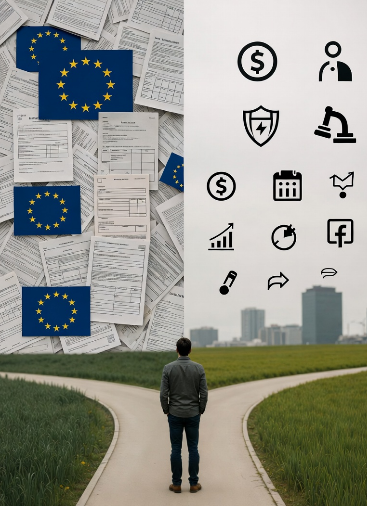
The Economic Path to Financial Freedom: A Traditional View
Historically, financial freedom has been seen as an economic pursuit. People dream of having enough savings or passive income from investments to cover their living expenses indefinitely, allowing them to choose how they spend their time. This vision often involves the classic “retire early” narrative, where individuals work intensely for a period, save and invest aggressively, and eventually accumulate enough wealth to stop working.
For much of the world, including Europe, this path has been relatively open to anyone with the right mindset, the necessary income, and the knowledge of how to grow wealth. The rise of fintech, access to global stock markets, and increased awareness around personal finance have all played their part in making financial independence a realistic goal for many.
However, this notion of freedom has become increasingly more complicated in Europe. As the global economy has evolved, so too have the laws governing wealth accumulation, inheritance, investment, taxation, and digital finance. These legal structures can either enable or severely limit financial freedom, depending on the country you live in and your financial circumstances.
The Legal Landscape of Financial Freedom in Europe
In Europe, the regulatory environment is undergoing a fundamental transformation. Several factors have contributed to this shift, particularly in the realms of taxation, capital movement, and wealth distribution. The following highlights how each of these legal factors plays a role in Europe’s evolving financial landscape.
- High Taxation and Wealth Redistribution
One of the most prominent legal barriers to financial freedom in Europe is the continent’s high tax rates, particularly on wealth, capital gains, and income. Countries like France, Italy, and the UK impose significant taxes on individuals with high incomes or those who accumulate substantial wealth. While these taxes serve as a means of funding public services and social programmes, they can make it far more difficult for individuals to achieve the level of financial freedom they aspire to.
For example, in many European nations, income tax rates can reach up to 50% or more, with additional taxes on capital gains, dividends, and other investments. These taxes not only reduce the potential wealth an individual can accumulate but also serve to limit the financial freedom of those trying to maximise their passive income streams.
While the tax rates vary across European countries, the overall trend shows a legal framework that places higher taxes on wealthier individuals, which can act as a barrier to wealth accumulation.
- Inheritance Laws and Wealth Transfer Restrictions
Inheritance laws in Europe can also complicate the pursuit of financial freedom. In some countries, such as France and Spain, strict inheritance laws dictate how property, wealth, and assets are divided among heirs. These laws can restrict the ability of individuals to pass on their wealth to their chosen heirs in the way they see fit.
Moreover, the European Union’s legal framework imposes restrictions on the free movement of capital, especially when it comes to investments in cross-border ventures. This creates further barriers for individuals who might seek to use Europe’s diverse markets to build wealth and diversify their portfolios. If you are an investor or a business owner in one country, moving or scaling your business across borders can be a complicated and legally challenging process.
- Digital Finance and Cryptocurrency Regulation
Another area where law and financial freedom intersect is in digital finance, particularly with regard to cryptocurrency. The European Union is in the process of rolling out its own cryptocurrency regulations, which will have a significant impact on anyone looking to use digital assets for wealth creation. Although cryptocurrencies offer a new avenue for financial freedom, their regulation is being increasingly scrutinised. The MiCA (Markets in Crypto-Assets) Regulation is a step toward more regulation of digital currencies and the entire crypto ecosystem.
This level of regulation raises concerns for investors in the digital space, as the legal framework often restricts their ability to fully control their assets. Unlike in countries with more lenient or undefined crypto regulations, like Switzerland or Singapore, Europe’s evolving regulatory environment could limit how people use cryptocurrency as a means to secure financial freedom.
Comparing Europe with Other Regions: The Legal Factor in Financial Freedom
When we compare Europe to other regions in the world, it becomes clear that the legal environment plays a far more significant role in determining financial freedom here than in some other places.
- United States: A Different Approach to Financial Freedom
In the United States, financial freedom is primarily seen through the lens of economic opportunity rather than legal constraints. Although taxes are high in the U.S., the legal system tends to be more supportive of wealth creation, especially when it comes to entrepreneurship, asset protection, and the movement of capital. Tax laws in the U.S. offer various opportunities to shelter wealth through 401(k)s, IRAs, and tax-deferred growth.
Additionally, the regulatory environment for digital finance is far less stringent than in Europe. In many states, cryptocurrency is still viewed as a commodity rather than currency, allowing for greater freedom of use and less regulatory oversight. As a result, American citizens often have more room to manoeuvre when it comes to creating wealth and achieving financial freedom.
- Switzerland: A Haven for Financial Freedom
Switzerland stands out as a notable exception in Europe. With its business-friendly environment, low taxation rates, and lenient crypto regulations, Switzerland offers a much more conducive environment for financial freedom compared to many of its European neighbours. Swiss banking laws are also known for providing privacy and security, allowing individuals to safeguard their wealth with less governmental interference.
- Singapore and Hong Kong: Global Leaders in Financial Freedom
In Asia, regions like Singapore and Hong Kong also provide a striking contrast to Europe. These places offer tax-friendly regimes, financial transparency, and a legal system that supports wealth generation. With low personal income taxes and minimal capital gains tax, both Singapore and Hong Kong have become hotspots for global entrepreneurs and investors. Furthermore, the relatively loose regulation around cryptocurrency has made both regions leaders in the digital finance space, providing a level of financial freedom that is harder to achieve in Europe.
Why Europe Needs to Rethink Financial Freedom
The shift in Europe’s approach to financial freedom highlights the growing need for a legal and regulatory rethink. While other regions, like the U.S., Singapore, and Hong Kong, continue to foster environments that encourage financial independence and wealth generation, Europe’s approach to taxation, inheritance, and digital finance is increasingly creating legal hurdles.
To ensure that individuals in Europe can continue to pursue financial freedom, there needs to be a balance between necessary regulation and opportunities for wealth creation. Europe’s lawmakers must consider whether their current policies, while aimed at redistributing wealth and funding public services, are inadvertently making it more difficult for individuals to build and retain wealth.
This calls for a reconsideration of tax laws, inheritance rules, and cryptocurrency regulations. By fostering an environment where financial freedom is not seen as a luxury for the few but a right for all, Europe can make strides towards becoming a region where wealth accumulation is possible through both economic means and legal frameworks.
Navigating Legal Barriers to Achieve Financial Freedom in Europe
While the pursuit of financial freedom remains an aspiration for many, the legal systems in Europe are increasingly shaping who can achieve it. High taxation, inheritance restrictions, and digital finance regulations all contribute to an environment where financial independence is often more difficult to attain than in other parts of the world. However, this does not mean that achieving financial freedom in Europe is impossible – it simply means that legal factors now play as significant a role as economic ones.
As Europe continues to grapple with these challenges, it must strike a delicate balance between regulation and opportunity, ensuring that all citizens have a fair shot at financial independence. Until then, those seeking financial freedom in Europe must learn to navigate the complex legal terrain that increasingly defines their path to prosperity.
XXX