In the United Kingdom, “Tory” is a colloquial term that refers to a member or supporter of the Conservative Party. The Conservative Party, often referred to simply as the “Conservatives,” is one of the major political parties in the UK. Members and supporters of the Conservative Party are commonly called “Tories.”

The term “Tory” in the UK is informal and may vary in tone from positive to negative, depending on the speaker’s perspective. Supporters of the Conservative Party may use the term proudly, while political opponents may use it critically.
In contemporary UK politics, the Conservative Party is often associated with policies promoting economic liberalism, reducing the role of the state in the economy, and a commitment to maintaining law and order. The party has had a significant influence on British politics and has produced many Prime Ministers, including figures like Winston Churchill and Margaret Thatcher.
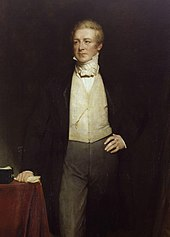
Robert Peel, twice Prime Minister of the United Kingdom and founder of the Conservative Party
The Conservative Party is one of the two main political parties in the UK, with the other being the Labour Party. The party is typically associated with center-right to right-wing political positions and has historically supported policies such as free-market capitalism, fiscal conservatism, and a strong national defense.
The term “Tory” has a long historical lineage in British politics and can be traced back to the late 17th century. It was originally used as a derogatory term to refer to those who supported the royalist cause during the English Civil War and were seen as being loyal to the monarchy. Over time, the term was adopted by the Conservative Party as a badge of honor.
===
The Conservative Party, often referred to simply as the “Conservatives” or “Tories,” is one of the two major political parties in the United Kingdom, with a long and storied history dating back to the late 17th century. Here is an overview of the history of the Conservative Party in the UK:
Origins
- The origins of the Conservative Party can be traced back to the late 17th century during the tumultuous period of English history, including the English Civil War and the Glorious Revolution of 1688.
- The term “Tory” was originally used as a derogatory term to refer to those who supported the royalist cause during the English Civil War. It was derived from the Irish word “tóraidhe,” which means “pursuer” or “outlaw.”
- Tories were seen as being loyal to the monarchy and supportive of the Stuart dynasty, while their political opponents, the Whigs, favored parliamentary supremacy.
Early Development
- The Tory Party gradually coalesced into a more organized political force during the late 17th and early 18th centuries.
- It was under the leadership of Sir Robert Walpole, a Whig, that the term “Tory” began to be used more positively to describe those who supported conservative and royalist principles.
19th Century
- The 19th century saw the Conservative Party evolve into a more cohesive political entity under leaders like Sir Robert Peel.
- The party was instrumental in passing significant legislation during this period, including the Reform Act of 1832 and the Corn Laws.
- Benjamin Disraeli and William Gladstone, both prominent leaders of the Conservative Party, played key roles in shaping the party’s identity and policies.
20th Century
- The Conservative Party continued to play a central role in British politics throughout the 20th century.
- Notable Conservative Prime Ministers during this period included Winston Churchill, who led the country during World War II, and Margaret Thatcher, who implemented a series of free-market reforms in the 1980s.
- The party went through various policy shifts and leadership changes during the century.
21st Century
- The Conservative Party, under the leadership of David Cameron, won the general election in 2010 and formed a coalition government with the Liberal Democrats.
- In 2016, the party was a key player in the Brexit referendum campaign, advocating for the UK’s withdrawal from the European Union.
Recent History
- The Conservative Party has been one of the two dominant political parties in the UK, alternating in power with the Labour Party.
- In recent years, the party has been associated with policies promoting economic liberalism, privatization, and a commitment to reducing government intervention in the economy.
2010 – 2023 Return to Government
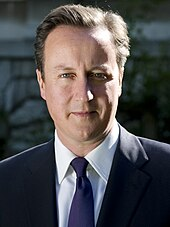
2010–2016: David Cameron
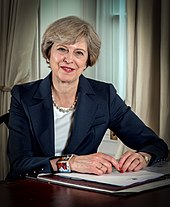
2016–2019: Theresa May
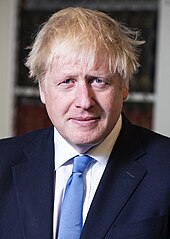
2019–2022: Boris Johnson
2022: Liz Truss

2022 – Present: Rishi Sunak

Further Reading ***
https://www.lbc.co.uk/politics/
xxx