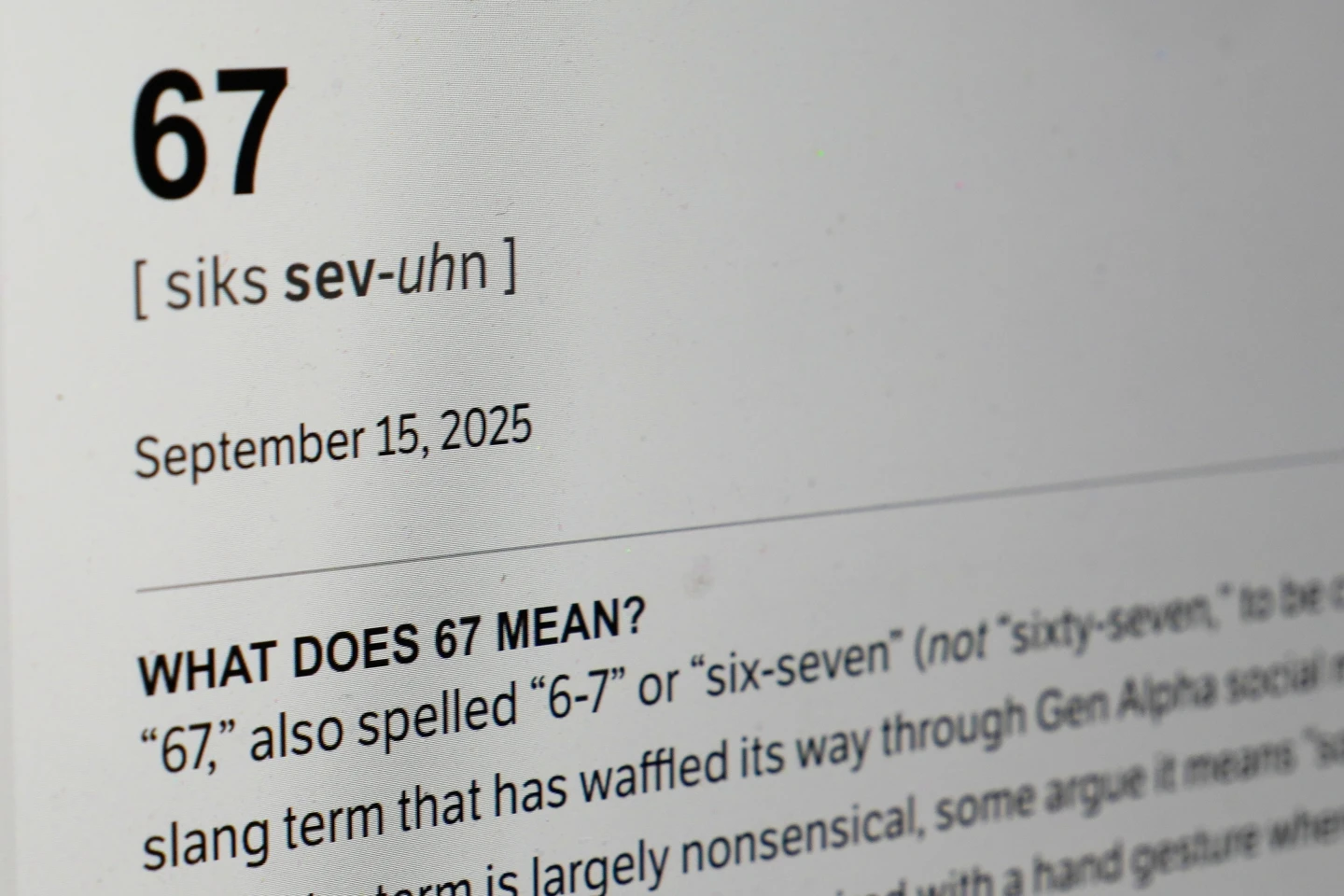
Meaning of 6-7
The Origins – from a Drill Song to Meme Status
The “6-7” meme traces back to the 2024 drill-rap track Doot Doot (6 7) by rapper Skrilla.
Skrilla – Doot Doot (6 7) (Official Music Video)
In the song’s beat drop, Skrilla repeats the numbers “6-7” – a refrain that stood out and caught on.
Once the song released officially (February 2025) its catchy drop quickly became a sound widely used on social-media platforms like TikTok and Instagram Reels.
What turned the lyric into a meme wasn’t some deep meaning or message, but rather remix culture, youth humour, and social-media virality. Users started making video edits, jokes, and spontaneous references with “6-7” simply as a punchline or vibe.
One key early boost came from edits of basketball content, especially featuring players with height “6′ 7″,” such as LaMelo Ball. Because he is 6 feet 7 inches tall, pairing his basketball footage with the “6-7” drop created a sort of visual pun, making the meme more shareable and obvious.
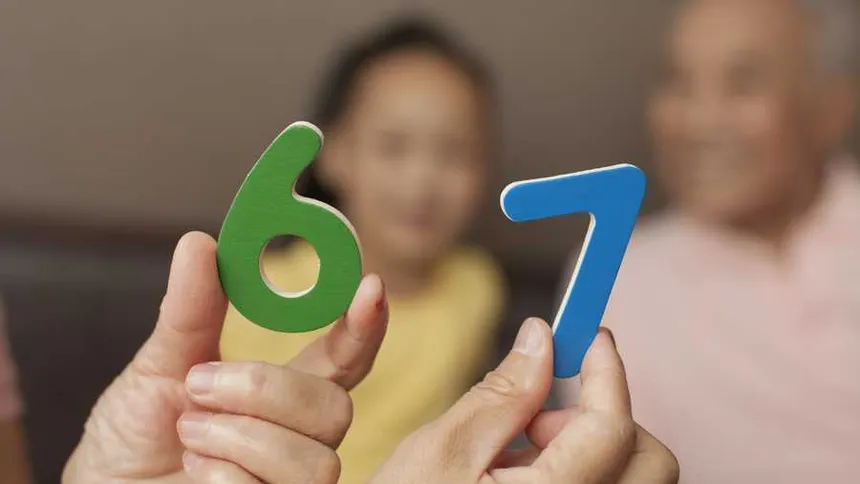
From there, things escalated: more people (especially younger users) began inserting “6-7” into everyday conversation, school hallways, gym classes, group chats, often accompanied by a goofy hand gesture.
What (If Anything) Does “6-7” Actually Mean?
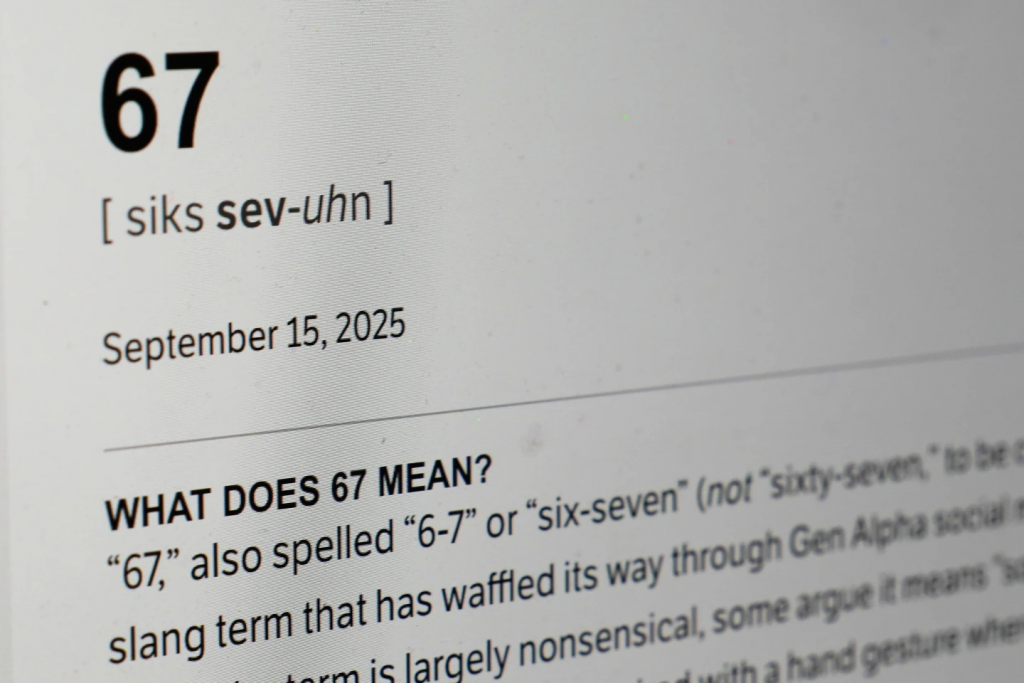
Despite how widespread it became, there is no concrete, agreed-upon meaning for “6-7.”
- Some theories connect “6-7” to a location: possibly “67th Street” in the hometown area of Skrilla.
- Others have speculated more abstractly, even suggesting that it might tie to police radio codes or metaphorical references (though these remain unconfirmed and widely debated).
- However, Skrilla himself has said he never gave the phrase a fixed meaning, and now prefers that it stay open to interpretation.
Because of this ambiguity, “6-7” functions less like a word with a stable definition, and more like a social symbol: a meme, a trigger for jokes, a way to show “in-group” membership, or simply to generate randomness and humour.
In other contexts, people have used “6-7” ironically, to mock itself, to express indifference or “meh,” or just to embody the absurdist energy of internet humour.
Meme Life Cycle: Spread, Competition, and Saturation
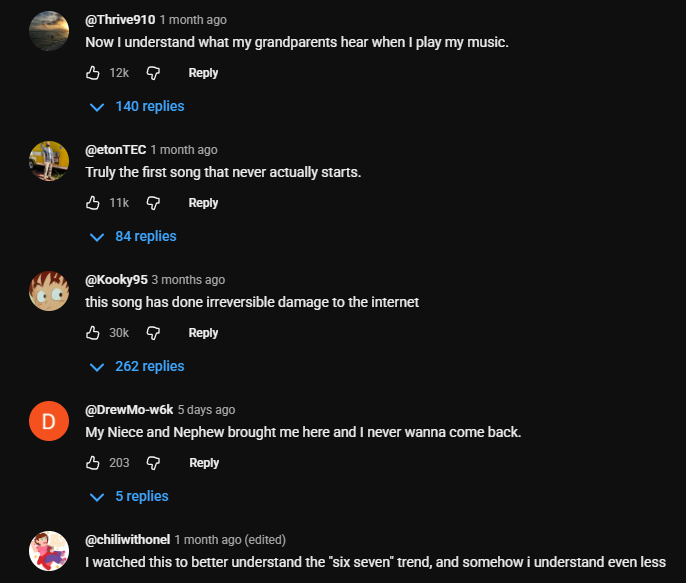
As of late 2025, “6-7” has not only spread widely, it has also started to be seen as a marker of what some call “digital brain-rot”: content that thrives on chaos, randomness, and detachment from meaning.
The meme even sparked “competitors” or variations: other number-based memes (like “41,” “93,” etc.) began cropping up as people experimented with the same formula.
At the same time, backlash grew. Many older people, parents, teachers, commentators, saw “6-7” as annoying, senseless, or emblematic of a trend-heavy youth culture that values virality over meaning.
Some critics argue that such memes reduce real artistic or lyrical work (like Skrilla’s) to mere fodder for jokes, stripping away context, social commentary, or emotional weight, reducing it to a “hook” for internet virality.
Cultural Significance: What “6-7” Says About 2025 Youth & Internet Culture
So why did “6-7” blow up? And why does it matter, even if it “means nothing”?
- Generational identity & belonging: For many young people (e.g. Gen Z, Gen Alpha), calling out “6-7” is like a secret handshake, a way to mark membership in a shared, global youth culture built on TikTok, memes, and inside jokes. The ambiguity itself becomes part of the point.
- Irony and absurdity as humour currency: In an era where memes often thrive on randomness, non-sequitur humour, and deliberate “nothingness,” “6-7” fits perfectly. It’s not about literal meaning, but about collective absurdity and shared confusion.
- The power of remix & algorithmic amplification: Because the meme originated from a song, was tied to a visually striking medium (basketball edits), and spread on platforms driven by algorithmic recommendation, it shows how media forms can spawn entirely new social phenomena.
- Generational pushback & misunderstanding: As older generations try to keep up, there’s friction. What feels like playful chaos to some feels like meaningless noise to others, highlighting divides in how different generations view language, communication, and meaning in the digital age.
The Truth: “6-7” Is Real … and Yet Essentially Meaningless
The reality behind the “6-7” meme is this:
- Yes, it genuinely originated from a real song, and yes, it really did snowball into a broad social-media phenomenon.
- But the numbers themselves carry no stable meaning. “6-7” is better understood as a cultural artifact, a meme, a symbol, a vibe, rather than a word or phrase to be interpreted literally.
- Its value isn’t in a dictionary-style definition, but in the social function it serves among youth: a shared joke, a group marker, a channel for absurd humour.
In short: “6-7” doesn’t mean anything. That’s exactly why, for many, it means everything.
X