Clause vs Conflict: The Inner Poetry Trial of Opposing Forces!
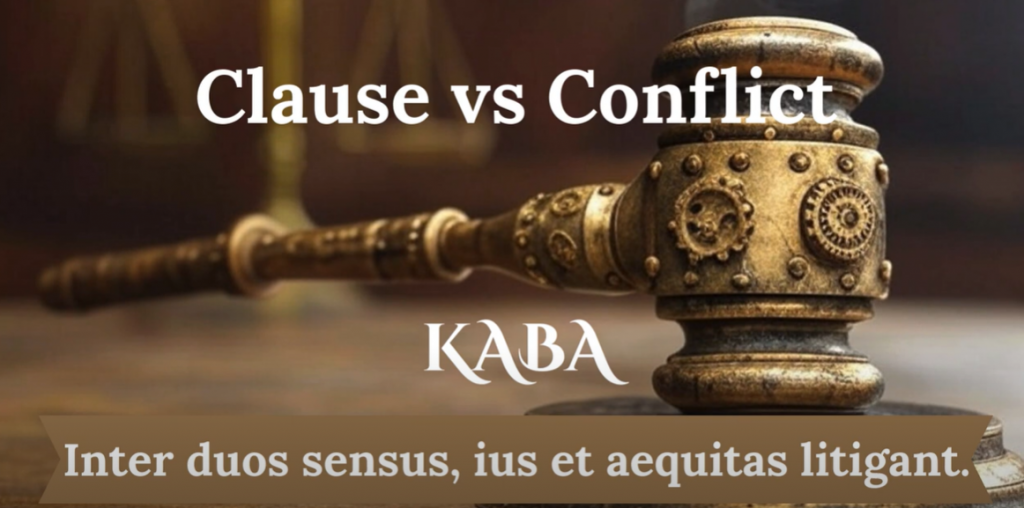
🌕 Inter duos sensus, ius et aequitas litigant. Between two meanings, law and equity are in dispute.
There are moments in life when we feel caught between two tides — one pulling us inward, toward our private world of feelings, instincts, and memories. The other, outward, is into the glare of responsibility, identity, and action. These opposing currents can feel like a quiet war, where clarity seems elusive.
When such a pattern arises, it invites a trial of self-awareness. You may experience a split: what you feel versus what you do, what you want versus what is expected. This tension, though uncomfortable, holds the growth potential. It sharpens self-perception, makes us question loyalties — to ourselves or others — and forces a reckoning of our values.
Some learn to harmonize this divide, weaving emotion with reason, and private needs with public roles. Others may swing between extremes before finding that rare middle ground. In relationships, these dynamics often play out with vivid intensity — a mirror showing not only how we relate, but how we wrestle with our contradictions.
Ultimately, this experience tests the integrity of our internal dialogue. It is not a punishment, but an initiation — a conflict that demands resolution through understanding, patience, and the courage to be whole.
⚖️ Legal Poem 🪶Clause vs Conflict
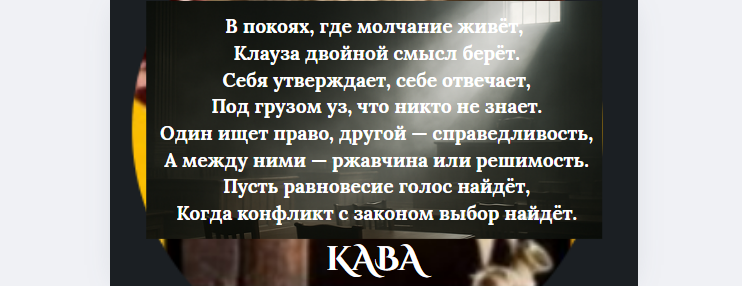
In chambers deep where silence swells, A clause within two meanings dwells. The self asserts, the self replies, Beneath the weight of unseen ties. One seeks the right, one feels the just, And in between — resolve or rust. Let balance find its rightful voice, When conflict meets the law of choice.
⚖️ Legal Article 📘 Conflict and Duality Through ADR (Alternative Dispute Resolution)
In the legal realm, internal and external conflicts often echo the broader patterns seen in complex human behaviour — where opposing interests must be reconciled. The emotional tension in psychological and symbolic frameworks has a practical analogy in Alternative Dispute Resolution (ADR).
ADR methods such as mediation and arbitration seek to resolve disputes not by confrontation, but through understanding and structured negotiation. In a typical mediation scenario, two parties may hold conflicting narratives — one guided by principle, the other by emotion or perceived harm. A skilled mediator functions as the bridge between these forces, guiding the parties toward recognition of both the rational and the emotional underpinnings of their disagreement.
The effectiveness of ADR, particularly in emotionally charged disputes like family law, workplace conflict, or contract interpretation, lies in its capacity to hold space for both the “visible” and “invisible” aspects of the dispute. When emotional truth meets logical structure, the result is not compromised, but transformation — a settlement that honours both law and feeling.
In this way, ADR becomes not just a legal tool but a human one, reflecting the same balance-seeking forces that challenge and shape us all.
CLIENT ADVISORY MEMORANDUM Subject: Key International Arbitration, ADR and Dispute‑Resolution Developments For: Corporations, Sovereign Entities, Investors, Legal Counsel, and Risk…
We use cookies to ensure that we give you the best experience on our website. If you continue to use this site we will assume that you are happy with it.



One thought on “Clause vs Conflict: The Inner Poetry Trial of Opposing Forces!”