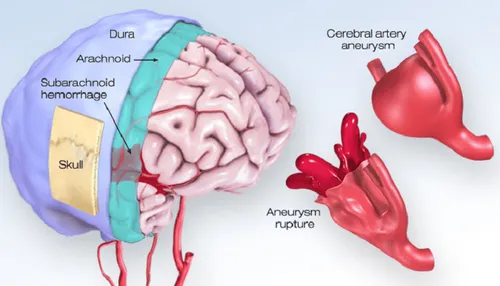
An aneurysm is a medical condition characterized by a localized, abnormal dilation or bulging of a blood vessel. Aneurysms can occur in arteries or veins, but they are more commonly associated with arteries, particularly the arteries that carry oxygenated blood away from the heart, such as the aorta (the main artery of the body) or cerebral arteries (arteries in the brain). Aneurysms can also occur in the arteries of other organs.
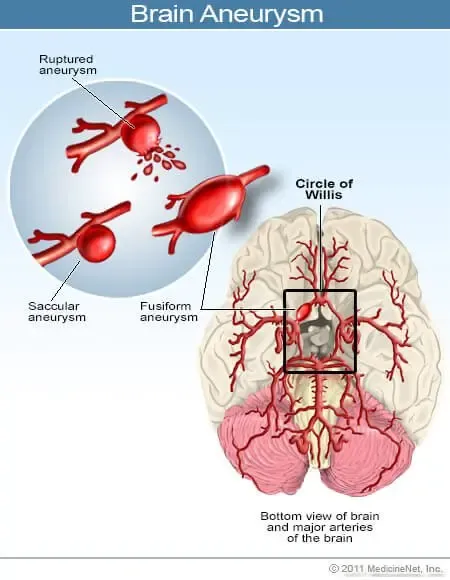
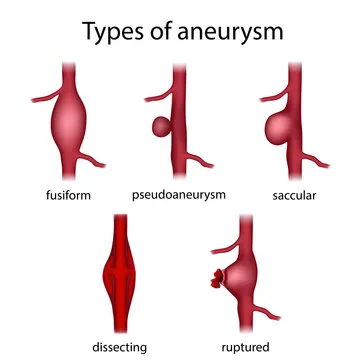
There are different types of aneurysms, including:
- Aortic Aneurysms: These occur in the aorta, which is the largest artery in the body. Aortic aneurysms can be located in the chest (thoracic aortic aneurysms) or in the abdomen (abdominal aortic aneurysms). They are potentially life-threatening if they rupture.
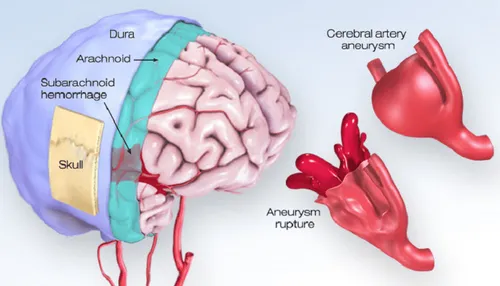
- Cerebral Aneurysms: These occur in the arteries of the brain. A ruptured cerebral aneurysm can lead to a type of stroke called subarachnoid hemorrhage.
- Peripheral Aneurysms: These occur in arteries outside the heart and brain, such as in the legs or arms.
Aneurysms can be caused by various factors, including:
- Weakness in the blood vessel wall.
- High blood pressure (hypertension).
- Atherosclerosis (hardening of the arteries).
- Infections or inflammation of the blood vessel wall.
- Trauma or injury to the blood vessel.
- Genetic factors (some individuals may be more predisposed to developing aneurysms).
Aneurysms can vary in size, shape, and location. Small aneurysms may not cause noticeable symptoms and can go undetected for years. However, larger aneurysms are at a higher risk of rupturing, which can lead to severe bleeding and potentially life-threatening consequences. Symptoms of a ruptured aneurysm can include sudden and severe pain, loss of consciousness, and other neurological deficits.
Treatment for aneurysms depends on their size, location, and the individual’s overall health. Small, stable aneurysms may be monitored closely without immediate intervention. Larger or high-risk aneurysms may require surgical repair or endovascular procedures to prevent rupture.
Early detection and management are crucial in preventing the complications associated with aneurysms, especially those at risk of rupture. Individuals with risk factors for aneurysms, such as a family history or certain medical conditions, may be advised to undergo regular screening and follow a healthcare provider’s recommendations for preventive measures.
XXX


This Morning dental expert Dr. Uchenna Okoye died from a bleed on the brain.
The 53-year-old, who also starred on Channel 5’s makeover show 10 Years Younger in 10 Days, collapsed in her west London home on 15th September 2023 and passed away a few hours later.
She leaves behind her seven-year-old daughter with her ex-husband, fellow doctor Chidi Ngwaba.
A coroner’s report revealed Dr. Uchenna’s cause of death was a ‘subarachnoid hemorrhage’, sparked by a ruptured blood vessel – known as an aneurysm – which caused bleeding in the space between the brain and the tissues which surround it.
xxx
Why brain aneurysms develop
According to the NHS UK, exactly what causes the wall of affected blood vessels to weaken is still unclear, although risk factors have been identified.
These include:
- smoking
- high blood pressure
- a family history of brain aneurysms
In some cases, an aneurysm may develop because there was a weakness in the walls of the blood vessels at birth.
XXX
German / Deutsch
Ein Aneurysma ist ein medizinischer Zustand, der sich durch eine lokale, abnormale Ausdehnung oder Beule eines Blutgefäßes auszeichnet. Aneurysmen können in Arterien oder Venen auftreten, werden jedoch häufiger mit Arterien in Verbindung gebracht, insbesondere mit den Arterien, die sauerstoffreiches Blut vom Herzen weg transportieren, wie der Aorta (der Hauptschlagader des Körpers) oder den zerebralen Arterien (Arterien im Gehirn). Aneurysmen können auch in den Arterien anderer Organe auftreten.
Es gibt verschiedene Arten von Aneurysmen, darunter:
- Aortenaneurysmen: Diese treten in der Aorta auf, die die größte Arterie im Körper ist. Aortenaneurysmen können sich in der Brust (thorakale Aortenaneurysmen) oder im Bauchraum (abdominale Aortenaneurysmen) befinden. Sie sind potenziell lebensbedrohlich, wenn sie platzen.
- Zerebrale Aneurysmen: Diese treten in den Arterien des Gehirns auf. Ein gerissenes zerebrales Aneurysma kann zu einer Art Schlaganfall führen, der als Subarachnoidalblutung bezeichnet wird.
- Periphere Aneurysmen: Diese treten in Arterien außerhalb des Herzens und des Gehirns auf, wie in den Beinen oder Armen.
- Aneurysmen können durch verschiedene Faktoren verursacht werden, einschließlich:
Schwäche in der Wand des Blutgefäßes. - Hoher Blutdruck (Hypertonie).
- Arteriosklerose (Verhärtung der Arterien).
- Infektionen oder Entzündungen der Gefäßwand.
- Verletzungen oder Schäden am Blutgefäß.
- Genetische Faktoren (einige Personen können anfälliger für die Entwicklung von Aneurysmen sein).
Aneurysmen können in Größe, Form und Lage variieren. Kleine Aneurysmen verursachen möglicherweise keine bemerkbaren Symptome und können jahrelang unentdeckt bleiben. Größere Aneurysmen haben jedoch ein höheres Platzerisiko, was zu schweren Blutungen und potenziell lebensbedrohlichen Folgen führen kann. Symptome eines gerissenen Aneurysmas können plötzliche und starke Schmerzen, Bewusstseinsverlust und andere neurologische Defizite sein.
Die Behandlung von Aneurysmen hängt von ihrer Größe, Lage und dem allgemeinen Gesundheitszustand der betroffenen Person ab. Kleine, stabile Aneurysmen können engmaschig überwacht werden, ohne dass sofortiger Eingriff erforderlich ist. Größere oder hochriskante Aneurysmen können eine chirurgische Reparatur oder endovaskuläre Verfahren erfordern, um ein Platzen zu verhindern.
Die frühzeitige Erkennung und Behandlung sind entscheidend, um Komplikationen im Zusammenhang mit Aneurysmen zu verhindern, insbesondere solchen mit Platzerisiko. Personen mit Risikofaktoren für Aneurysmen, wie einer Familiengeschichte oder bestimmten medizinischen Erkrankungen, erhalten möglicherweise den Rat, sich regelmäßigen Untersuchungen zu unterziehen und die Empfehlungen eines Gesundheitsdienstleisters für vorbeugende Maßnahmen zu befolgen.
===
Polish / Polski
Aneurysma to stan medyczny charakteryzujący się miejscowym, nieprawidłowym rozszerzeniem lub wypukleniem naczynia krwionośnego. Aneurysmy mogą występować w tętnicach lub żyłach, ale są one częściej związane z tętnicami, zwłaszcza z tętnicami przewodzącymi krew natlenioną z serca, takimi jak aorta (główna tętnica ciała) lub tętnice mózgowe (tętnice w mózgu). Aneurysmy mogą również występować w tętnicach innych narządów.
Istnieje wiele różnych rodzajów aneurysm, w tym:
- Aneurysmy aorty: Występują w aorcie, która jest największą tętnicą w organizmie. Aneurysmy aorty mogą znajdować się w klatce piersiowej (aneurysmy aorty piersiowej) lub w jamie brzusznej (aneurysmy aorty brzusznej). Są one potencjalnie groźne dla życia, jeśli pękają.
- Aneurysmy mózgowe: Występują w tętnicach mózgu. Pęknięte aneurysmy mózgowe mogą prowadzić do rodzaju udaru nazywanego krwotokiem podpajęczynówkowym.
- Aneurysmy obwodowe: Występują w tętnicach poza sercem i mózgiem, na przykład w nogach lub ramionach.
Aneurysmy mogą być spowodowane różnymi czynnikami, w tym:
- Osłabienie ściany naczynia krwionośnego.
- Wysokie ciśnienie krwi (nadciśnienie).
- Miażdżyca (stwardnienie tętnic).
- Infekcje lub stan zapalny ściany naczynia krwionośnego.
- Urazy lub obrażenia naczynia krwionośnego.
- Czynniki genetyczne (niektóre osoby mogą być bardziej predysponowane do rozwoju aneurysm).
Aneurysmy mogą różnić się wielkością, kształtem i położeniem. Małe aneurysmy mogą nie wywoływać zauważalnych objawów i mogą pozostawać nierozpoznane przez wiele lat. Większe aneurysmy są jednak bardziej narażone na pęknięcie, co może prowadzić do ciężkich krwotoków i potencjalnie zagrażających życiu konsekwencji. Objawy pękniętego aneurysmu mogą obejmować nagły i silny ból, utratę przytomności i inne deficyty neurologiczne.
Leczenie aneurysm zależy od ich wielkości, położenia i ogólnego stanu zdrowia osoby. Małe, stabilne aneurysmy mogą być ścisłe monitorowane bez natychmiastowej interwencji. Większe lub wysokiego ryzyka aneurysmy mogą wymagać chirurgicznego usunięcia lub zabiegów endowaskularnych w celu zapobieżenia pęknięciu.
Wczesne wykrycie i leczenie są kluczowe dla zapobieżenia powikłaniom związanym z aneurysmami, zwłaszcza tym, które są narażone na pęknięcie. Osoby z czynnikami ryzyka wystąpienia aneurysm, takimi jak historia rodziny lub określone schorzenia medyczne, mogą otrzymać zalecenia od lekarza dotyczące regularnych badań i przestrzegania środków zapobiegawczych.
===
French / Français
Un anévrisme est une condition médicale caractérisée par une dilatation ou une saillie anormale localisée d’un vaisseau sanguin. Les anévrismes peuvent se produire dans les artères ou les veines, mais ils sont plus couramment associés aux artères, en particulier aux artères qui transportent le sang oxygéné loin du cœur, comme l’aorte (la principale artère du corps) ou les artères cérébrales (les artères du cerveau). Les anévrismes peuvent également se former dans les artères d’autres organes.
Il existe différents types d’anévrismes, notamment :
- Anévrismes de l’aorte : Ils se produisent dans l’aorte, qui est la plus grande artère du corps. Les anévrismes de l’aorte peuvent être situés dans la poitrine (anévrismes aortiques thoraciques) ou dans l’abdomen (anévrismes aortiques abdominaux). Ils peuvent mettre la vie en danger s’ils se rompent.
- Anévrismes cérébraux : Ils se forment dans les artères du cerveau. Un anévrisme cérébral rompu peut entraîner un type d’accident vasculaire cérébral appelé hémorragie sous-arachnoïdienne.
- Anévrismes périphériques : Ils se produisent dans les artères en dehors du cœur et du cerveau, comme dans les jambes ou les bras.
Les anévrismes peuvent être causés par divers facteurs, notamment :
- Une faiblesse de la paroi du vaisseau sanguin.
- Une hypertension artérielle (hypertension).
- Une athérosclérose (durcissement des artères).
- Des infections ou une inflammation de la paroi du vaisseau sanguin.
- Un traumatisme ou une blessure au vaisseau sanguin.
- Des facteurs génétiques (certaines personnes peuvent être plus prédisposées à développer des anévrismes).
Les anévrismes peuvent varier en taille, en forme et en emplacement. Les petits anévrismes peuvent ne pas provoquer de symptômes apparents et peuvent passer inaperçus pendant des années. Cependant, les anévrismes plus grands présentent un risque plus élevé de rupture, ce qui peut entraîner des saignements graves et des conséquences potentiellement mortelles. Les symptômes d’un anévrisme rompu peuvent inclure une douleur soudaine et intense, une perte de conscience et d’autres déficits neurologiques.
Le traitement des anévrismes dépend de leur taille, de leur emplacement et de l’état de santé général de la personne. Les petits anévrismes stables peuvent être surveillés de près sans intervention immédiate. Les anévrismes plus gros ou à haut risque peuvent nécessiter une réparation chirurgicale ou des procédures endovasculaires pour éviter la rupture.
La détection précoce et la prise en charge sont cruciales pour prévenir les complications associées aux anévrismes, en particulier chez les personnes présentant des facteurs de risque tels qu’une histoire familiale ou certaines affections médicales. Il peut être recommandé aux personnes à risque de subir des dépistages réguliers et de suivre les recommandations d’un professionnel de la santé en matière de mesures préventives.
===
Russian / Pусский
Аневризма – это медицинское состояние, характеризующееся локализованным аномальным расширением или выпячиванием сосуда. Аневризмы могут возникать в артериях или венах, но они чаще всего ассоциируются с артериями, особенно с артериями, которые переносят оксигенизированную кровь из сердца, такими как аорта (главная артерия организма) или артерии мозга (артерии в мозгу). Аневризмы также могут возникать в артериях других органов.
Существует разные типы аневризм, включая:
- Аортальные аневризмы: они возникают в аорте, самой крупной артерии организма. Аортальные аневризмы могут находиться в грудной клетке (грудные аортальные аневризмы) или в брюшной полости (брюшные аортальные аневризмы). Они могут представлять угрозу жизни, если происходит разрыв.
- Мозговые аневризмы: они возникают в артериях мозга. Разрыв мозгового аневризмы может привести к развитию формы инсульта, называемой субаракноидальным кровоизлиянием.
- Периферические аневризмы: они возникают в артериях за пределами сердца и мозга, например, в ногах или руках.
Аневризмы могут возникать по разным причинам, включая:
- Ослабление стенки сосуда.
- Высокое кровяное давление (гипертония).
- Атеросклероз (закупорка артерий).
- Инфекции или воспаление стенки сосуда.
- Травма или повреждение сосуда.
- Генетические факторы (некоторые люди могут быть более предрасположены к развитию аневризм).
Аневризмы могут различаться по размеру, форме и местоположению. Маленькие аневризмы могут не вызывать заметных симптомов и оставаться незамеченными на протяжении многих лет. Однако более крупные аневризмы имеют более высокий риск разрыва, что может привести к сильному кровотечению и потенциально угрожающим жизни последствиям. Симптомы разрыва аневризмы могут включать внезапные и сильные боли, потерю сознания и другие неврологические расстройства.
Лечение аневризм зависит от их размера, местоположения и общего состояния здоровья человека. Маленькие, стабильные аневризмы могут тщательно мониториться без немедленного вмешательства. Более крупные или высокорискованные аневризмы могут потребовать хирургического вмешательства или эндоваскулярных процедур для предотвращения разрыва.
Раннее выявление и лечение играют важную роль в предотвращении осложнений, связанных с аневризмами, особенно у тех, кто подвержен риску разрыва аневризм, таких как наличие семейного анамнеза или определенных медицинских состояний. Рекомендуется, чтобы лица с факторами риска для аневризм проходили регулярное скрининговое обследование и следовали рекомендациям медицинских специалистов по мерам профилактики.
===