Most obituaries focus on the positives. Brian Eldridge recounts a life of sadness and isolation.
By MARY DIVINE | mdivine@pioneerpress.com | Pioneer Press
PUBLISHED: August 9, 2023, at 3:01 p.m. | UPDATED: August 10, 2023, at 3:26 p.m.
Brian Eldridge is loved.
But it took his death and an uncommonly candid obituary for the world to express it.
The obituary, published in Sunday’s Pioneer Press, has spread across social media and garnered online tributes from people he never met. Most newspaper obituaries focus on the positives. Eldridge’s obituary recounts a life of sadness and isolation.
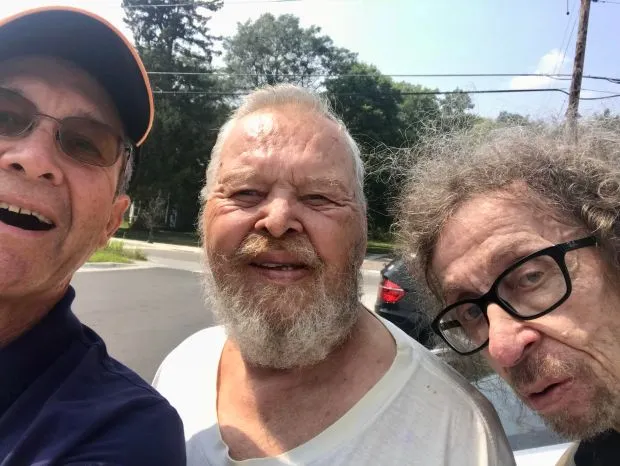

(Courtesy of Steve Eldridge)
“Brian was bullied as a child and teenager because of his shyness and vulnerability,” the obituary says. “As an adult, he didn’t fit in. He never learned to use a computer or a cell phone, which kept him from applying for most jobs. He worked and supported himself through paper routes, aluminum can recycling and janitorial work. He was exploited by employers. His last job was cleaning a bingo hall at midnight for $10 per hour 7 nights a week 364 days a year with just less than the minimum weekly hours to have any rights or benefits. His employer fired him on Christmas Eve with no notice. He had worked there for over 15 years. He had no friends or family who kept up with him. He was quiet, smart, generous and lonely.”
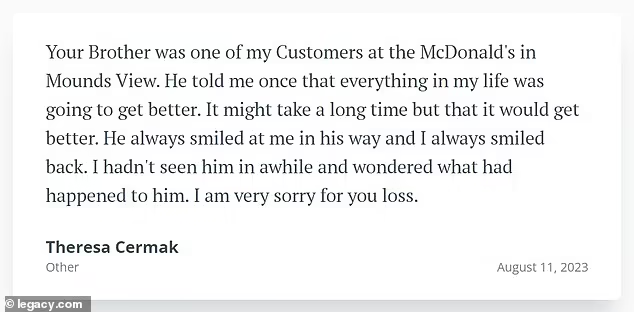
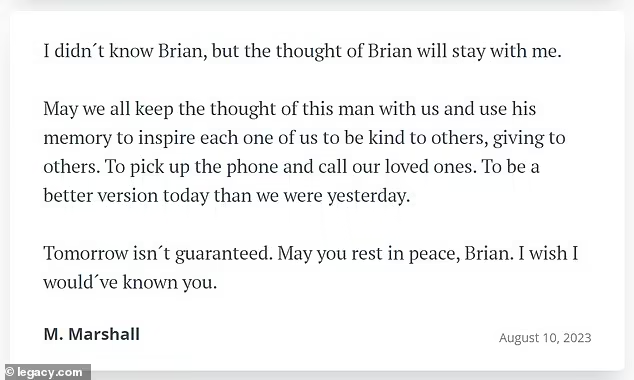
Dozens of readers responded immediately.
“Brian, you have touched the hearts of people who wish they had known you, so they could have tried to make life better for you,” wrote one reader. “I think your legacy will be the lessons we have learned and been reminded of. In honor of your life, we should all be moving forward with more care for fellow humans, especially the most vulnerable among us.”
A retired priest in Crosslake, Minn., wrote that he had shared Eldridge’s obituary in his weekend homily.
“You could have heard a pin drop, it was so quiet,” he wrote. “I didn’t know Brian, but what a wonderful lesson for us all.”
A woman named Marie wrote that she came upon Eldridge’s obituary by chance. “Not sure why today was the day a newspaper was left on a bench,” she wrote. “Not sure why I read Brian´s obit. But I do know that your writing has changed me. Bless you, dear friend. Eternal rest upon Brian.”
Dead for Days
Officers found Eldridge, 76, in his Mounds View apartment on July 11 after his brother called the police and asked them to check on him. Brian Eldridge, who died of natural causes, had been dead at least four days, maybe longer, Steve Eldridge said.
Steve Eldridge, who lives in Philomath, Ore., said he and his family were coming into town and had hoped to see his brother on their way “up north.”
“I called to tell him we were coming and see if we could all visit him,” he said. “I called for four days in a row and no answer, and so I called the police.”
Eldridge said he last spoke to his brother on May 4, Brian Eldridge’s 76th birthday, and last saw him in October 2022.
Eldridge said he decided to be “brutally honest” in the obituary because he wanted people to know the real story behind his brother’s life – and death.
“Nobody else knew him,” he said. “When our other brother, David, died in October, I basically explained how his life was shot because of schizophrenia. I wanted to be just as honest with Brian’s obituary because his story is sad and true. I personally struggle with the question, ‘Am I my brother’s keeper?’ I have to live with the guilt, regret, and shame that I didn’t try harder to stay closer, to see him more, to call him more, to be there for him.”

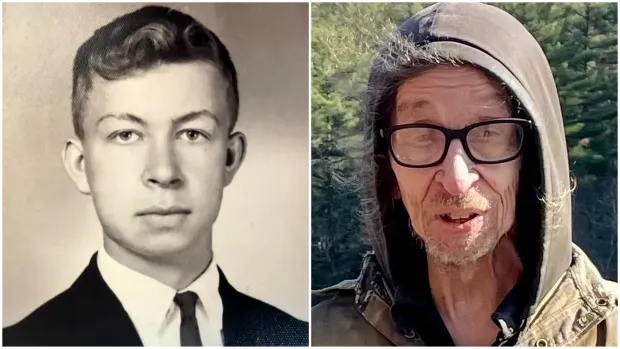
The obituary included two photos: One is Brian Eldridge’s senior photo, taken around the time he graduated from Central High School in St. Paul in 1965, and the other is from October 2022 during an outing the brothers took to Taylors Falls. The 2022 photo doesn’t show Brian Eldridge’s long hair or trademark ratty jacket, he said.
“Brian’s hair was down to the middle of his calves when he died,” he said. “He’d let it grow for probably 45 years. He wouldn’t cut it. My mom once offered him $10,000 to cut his hair, and he wouldn’t do it. At that point, it was just, ‘It’s mine.’ Of course, it made him look even more different than he already did.”
Brian Eldridge also insisted on wearing a dirty tan jacket that “had holes everywhere and ragged edges,” he said. “It was awful, and it smelled, but he would not put on another one. My dad had three or four jackets almost like it, and they were in the closet there, and he would not use them. I kept telling him, ‘You look like somebody who’s living under the Lake Street Bridge. You don’t have to do that.’ But he was adamant. That’s what he wore, and that was it. Was he trying to have people turn off from him, so he didn’t have to talk to them or face them? I don’t know.”
Painfully Shy
Brian Eldridge was born and raised in St. Paul, the middle of three sons born to Franklin and Cecile Eldridge. As a child, he suffered from asthma and nephritis, a kidney condition, which set him apart from other kids, and he had terrible acne as a teenager, Steve Eldridge said.
“He was painfully shy, and it really affected him,” he said. “He got left out more and more, and kids teased him. I was basically his only friend, and we played together all the time as little children. Once we got to high school, that changed.”
Brian Eldridge was drafted to serve in Vietnam and sent to basic training at Fort Leonard Wood, Mo., for two weeks before he was released on a medical deferment, Steve Eldridge said.
“They said he had the worst case of acne they had ever seen, and the Army wasn’t going to pay for the medication that he needed,” he said. “It’s too bad because he actually kind of like basic training. He liked being in a group where nobody knew him. He had a great memory, so he could memorize all the crap the recruits have to memorize, and physically he was OK. He could keep up.”
After his release from the Army, Brian Eldridge struggled to find work. He landed a job as a baggage handler for Northwest Airlines at O’Hare International Airport in Chicago, but it lasted only a month, Steve Eldridge said. A mishap with a baggage-and-cargo trailer led to the destruction of a rock band’s instruments and amplifiers, and “he got fired immediately,” he said.
Eldridge delivered newspapers every morning and evening and collected aluminum cans at night, Steve Eldridge said. “He said the best places were in the Dumpsters behind bars and restaurants, so that was his income,” he said.
OBITUARY: Listening House director Rosemarie Reger-Rumsey believed in offering ‘radical hospitality‘
His brother lived in a two-bedroom apartment crammed full of stuff, he said. “You could barely walk into his kitchen because of all the canned goods on the floor,” he said. “There were newspapers piled high on his coffee table, and boxes of magazines everywhere. He was a collector. That’s what he called himself.”
Among the items Brian Eldridge collected: Hallmark Christmas ornaments; Franklin Mint vintage model cars, trucks, and race cars; saltwater aquariums; boxes of Wheaties cereal; cans of Billy Beer; DVDs and videos; paper clips; signed baseballs and Twins memorabilia.
“Even though he didn’t have a lot of money when he got any or had more than he needed in a month, he would buy things like Hallmark collectibles,” Steve Eldridge said. “I found 343 of those Hallmark collectibles in eight boxes in his closet.”
Brian Eldridge loved to read magazines and subscribed to more than a dozen different publications through the years, including Aquarium Hobbyist, Baseball Digest, Bonsai Today, Corvette: The Official Journal of America’s World-Class Sports Car, Hemmings Motor News, Minnesota Horticulturist, Reader’s Digest, Solar Magazine, Tropical Fish and National Geographic.
“Those were all interests of his at some time, but he was no longer doing any of those things,” Steve Eldridge said. “He was a baseball nut, especially the Twins and the Saints. Earlier in his life, he followed the entire major leagues and minor leagues. He could tell you the batting average of every hitter and the ERAs of the pitchers in both major leagues at one time.”
Brian Eldridge rented two storage garages at his apartment complex, and one housed “six or seven aquariums – a couple of them were 200-gallon saltwater aquariums, which are huge and expensive,” Steve Eldridge said. “He stopped using them when he moved to his apartment 20 years ago, but he saved all the gravel, the pumps, the lights, everything.”
When Steve Eldridge arrived last month to clean out his brother’s apartment, he found a freezer full of meat and a refrigerator crammed with six gallons of milk and 16 cartons of eggs.
“He had started going to the food bank every month, and they’d give him this big box of food,” he said. “It was free, so why not take it?”
Tries at Technology
In his 20 years in his apartment, Brian Eldridge had never used the oven or stove, his brother said. “When I realized that a few years ago, I said, ‘Let’s cook a meal in the microwave,’ which he’d never used,” he said. “We got a frozen dinner and put it in there, and I showed him how to use it, and he thought it was amazing. From then on, he did start using the microwave. He would heat up spaghetti sauce and eat that with bread.”
Brian Eldridge had two cars at the time of his death: a 2016 Chevrolet Cruze and a 1998 Saturn. “When he had to work at the bingo hall, he wanted something reliable that would start in the winter,” Steve Eldridge said. “He kept them up and kept the batteries charged.”
Every morning, he would drive to the SuperAmerica closest to his apartment and buy the Pioneer Press, the Star Tribune, a lottery ticket, and “sometimes a frozen burrito or something,” Steve Eldridge said. “At one point, he’d accumulated more than 2 million SuperAmerica points– the most they’d ever seen one person have. When they discontinued the program, he had to cash them out. The store didn’t know how to do that. They ended up giving him 14 $50 gift cards.”
Brian Eldridge took the gift cards to Best Buy and bought “a 72-inch TV with a stand and had somebody bring it over and put it in,” Steve Eldridge said. “But when I went there a year later, he hadn’t used it. I said, ‘Why?’ He said, ‘Well, the channels don’t come in.’”
Steve Eldridge fixed the issue and left a set of detailed instructions, but his brother struggled to get it to work. He also owned four computers – “none of which he knew how to use,” Steve Eldridge said.
During one of Steve Eldridge’s trips to Minnesota, Brian Eldridge mentioned he was having trouble with a computer he had recently purchased at Best Buy. “He said it was broken,” he said. “I went over, and he hadn’t turned on the screen. When you’re computer-illiterate, everything is just hard. He tried taking a computer class at the local library once, but he said after the first one, everybody was so far ahead, he was embarrassed and he quit.”
But his older brother was “intelligent and had a memory like an elephant,” he said. “When I’d come, lots of times, I’d pick up both brothers, and we’d drive around the old neighborhoods, places we’d been. He would remember the names of neighbors from two blocks down. He was just amazing that way.”
Brian Eldridge lived off his Social Security benefits, and interest and dividends from a $300,000 brokerage account inherited from their parents, Steve Eldridge said. “The only time he ever touched the principal was in 2016 when I convinced him to scrap his rusted-out van that didn’t run and buy his Chevy Cruze,” he said. He left his estate to his nieces, Steve Eldridge’s three daughters, and included small bequests to five raptor centers in his will, he said.
A Mass for Eldridge

Brian Eldridge went for more than 50 years without seeing a doctor. He was never diagnosed with or treated for a mental illness, Steve Eldridge said. In 2013, he was diagnosed with high blood pressure – a medical condition that Steve Eldridge thinks contributed to his death.
While cleaning his brother’s apartment in July, Steve Eldridge found a notice from the landlord that said Brian Eldridge was going to have to vacate his apartment “because they were doing renovations, and his rent was going up from $1,200 to $1,600 a month,” he said. “Could that have triggered the blood pressure? I don’t know. How long was he dead? They wouldn’t hazard a guess. He could have been dead for a month — nobody would know.”
After reading Eldridge’s obituary, Kim Albrecht, director of worship at St. Odilia Catholic Church in Shoreview, reached out to the Pioneer Press and offered to hold a free funeral service at the church.
“We were so moved and saddened by his life story,” she said. “Part of our Catholic belief is that every life is sacred and to be celebrated and honored. I feel that as a society, we failed him, but his obituary has touched many people, so maybe we can correct some of that by honoring him in death.”
Steve Eldridge declined the offer, noting that the family plans to hold a private ceremony to scatter his ashes, but St. Odilia congregants will offer a Mass for Eldridge at 7:30 a.m. Aug. 20, and his name will be read in the intentions that weekend at each of the church’s five Masses.
OBITUARY: Nel Schweiss, the East Side’s Flower Lady, ‘saw the worth of everyone‘
Albrecht said she hopes people will read Eldridge’s obituary and be moved to take action.
“I hope people realize they need to be nice to each other,” she said. “We just need to be nice to each other and try to be understanding. I want to be more mindful when I run into someone who is not like me or seems to be struggling.”
Steve Eldridge said he has been moved by the tributes to his brother but is frustrated by the lack of fellowship shown to him while he was alive.
“Why didn’t anybody find out his name? It’s not like he had friends, or anyone invited him anywhere or even talked to him,” he said.
“I just wanted people to meet my brother and maybe empathize with him and to say to themselves: Could I have met him? Known him? Introduced myself? Talked to him? Or somehow maintained contact to the point where we wouldn’t have discovered his dead body after God knows how long because nobody cared?” he said. “That’s all. It’s a sad story.”
The reality is no one cares. You will get a diagnosis from the Doctors (Professionals) that you are mentally unstable, and your relatives and fake friends will ‘demand’ that you snap out of it.
Addictions, Instabilities, and Mental Illnesses are genetic.
Accept this fact and move ahead with that reality. Anyone telling you otherwise, can stay far away, and act to care after you are gone.
Instead of investing in your well-being, you are bullied and bullied and bullied into isolation.
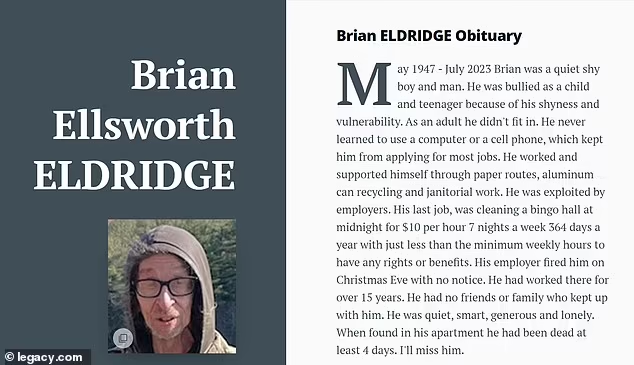
A little life: Heartbreaking viral obituary tells story of man bullied at school for being shy, shunned as an adult and exploited into working 364 days a year as cleaner for $10-an-hour – before being fired on Christmas Eve and dying alone aged 76
- A heartbreakingly candid obituary details the sad life of Brian Eldridge
- The Minnesota man died aged 76 with ‘no friends or family after a lifetime of exploitation and ridicule
- His story went viral as many paid tribute to the man they didn’t even know
Altering the course of rivers and moving mountains is easy. Changing someone’s character is impossible.
Chinese Proverb
===
There is one who wants to keep shutting you down, even hanging up distance calls on you, because this person does not want to hear your truth, good or bad. Each person is set in their own way.
No one cares when pretenders are sat on their high horses.
No one is listening.
As an individual, instead of getting a listener, you are told to snap out of your pain.
Dying slowly in pain. So poor in misery. I wish the pain can stop.
We come into the world with brains that are already unique, shaped by a combination of our genetic background and programming in the womb, and in which our characteristics, talents, and limitations are to a large extent determined. This applies not just to things like IQ, being an early bird or a night owl, the extent to which we are spiritual, neurotic, psychotic, aggressive, antisocial, or nonconformist, but also to the risk we run of developing brain disorders like schizophrenia, autism, depression, and addiction.
By adulthood, there is very little about our brains that can be modified, and our characteristics have been established.
This structuring of our brains determines their function: We are our brains.
Our genetic background and a host of factors that shaped our early brain development limit us in many ways. We aren’t free to decide to change our gender identity, sexual orientation, level of aggression, character, religion, or mother tongue. That we lack free will is not a new concept, and I find myself in the best of company here.
Neuroscientist Dick Swaab – We are our brains
Spinoza already demonstrated this with a few examples (Ethics III, proposition 2):
An infant believes that of its own free will it desires milk
A hot-headed youth believes he freely desires vengeance
A coward believes he freely desires to run away
A delirious man, a garrulous woman, a child … believe that they speak from the free decision of their mind, when in reality unable to restrain their impulse to talk.
Spinoza shows that characteristics are innate. You cannot change them.
Spinoza
Charles Darwin came to the same conclusion in his autobiography, theorizing that “education and environment produce only a small effect on the mind of anyone, and that most of our qualities are innate.”
Charles Darwin