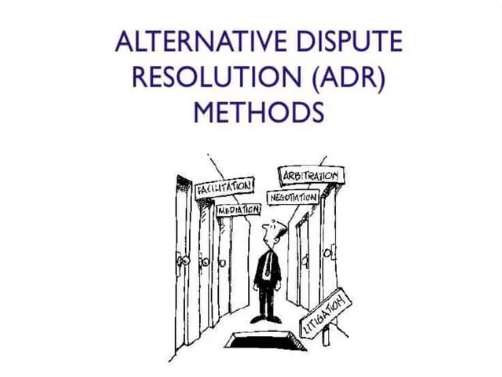
Alternative Dispute Resolution (ADR), which includes mediation, arbitration, negotiation and other non-judicial procedures, has become an increasingly important feature of contemporary legal practice. Rather than relying solely on the formal court system, many jurisdictions now encourage or require parties to attempt ADR at an early stage. This trend reflects not only the growing need to reduce court backlogs and costs, but also a deeper shift towards dispute resolution grounded in dialogue, understanding and the preservation of relationships.
Recent institutional data illustrates the strength of this movement. For example, the International Chamber of Commerce reported in 2024 that it had administered a substantial number of cases under its Expedited Procedure Provisions. These involved parties from more than 130 jurisdictions, signalling widespread global confidence in streamlined, settlement-oriented processes.
Recent Case Law: Judicial Encouragement of ADR and the Importance of Procedural Integrity
Recent decisions from courts around the world demonstrate two clear developments. The first is the increasing judicial willingness to direct parties towards ADR. The second is a heightened level of scrutiny applied to arbitration where concerns arise about fairness or impartiality.
In the United Kingdom, the judgment in Churchill v Merthyr Tydfil County Borough Council (2023) confirmed that courts have the power to order parties to engage in ADR where appropriate. The subsequent amendment of procedural rules in October 2024 has made this power a routine part of case management. The first reported order of this kind was made in DKH Retail and others v City Football Group in 2024. Together, these developments reflect a clear judicial endorsement of mediation and other forms of ADR as mechanisms that serve the overriding objective of achieving justice in a proportionate and efficient manner.
Courts have also continued to examine the integrity of arbitration. A notable example is Opportunity Fund v Telecom Italia S.p.A. (Paris Court of Appeal, May 2024), in which the court annulled an ICC arbitral award after it emerged that the presiding arbitrator’s law firm had a professional relationship with a parent company of one of the parties. This raised reasonable doubts about independence and highlighted the ongoing need for transparency in arbitral appointments.
In the United States, recent Supreme Court decisions have also shaped the landscape. In Bissonnette v LePage Bakeries Park St., LLC (2024), the Court clarified that a worker does not need to be employed within the transportation sector to fall within the transportation worker exception to the Federal Arbitration Act. In Smith v Spizzirri (2024), the Court held that where a dispute is subject to arbitration and a party requests a stay, the court must stay the proceedings rather than dismiss them. This ensures that the parties are given a fair opportunity to pursue arbitration without forfeiting procedural protections.
ADR and the Emphasis on Empathy, Connection and Relational Understanding
A notable feature of modern ADR practice is its alignment with values traditionally associated with constructive interpersonal relationships. Approaches such as mediation encourage parties to engage not merely as adversaries, but as individuals with interests, emotions and a need to be heard and understood.
The qualities involved in effective mediation are similar to those that foster healthy relationships: sensitivity to the perspectives and needs of others, a willingness to listen deeply, and a desire to form meaningful connections rather than superficial or hostile exchanges. Many disputes benefit from precisely these attributes. ADR can therefore serve as a space where emotional awareness and mutual understanding are not only relevant but essential.
Judicial support for ADR acknowledges this. By directing parties towards facilitated dialogue, courts recognise that many disputes are better resolved through communication and empathy than through adversarial litigation. At the same time, the insistence on arbitrator impartiality, demonstrated in cases such as Opportunity Fund, shows that fairness and trust must remain central. Without these safeguards, the relational values inherent in ADR can quickly be undermined.
Risks and Tensions: Balancing Efficiency with Fairness
Despite its advantages, ADR is not without risks. The flexibility and confidentiality that make it attractive can also create opportunities for undue influence, power imbalances or lack of transparency. The annulment of the arbitral award in Opportunity Fund serves as a reminder that even well-established institutions must remain vigilant.
Mandatory ADR, if applied without sensitivity, can create further challenges. Parties with legitimate grievances may feel pressured to compromise, especially where significant power disparities exist or where wrongdoing requires public scrutiny. There is also the risk that promoting ADR for reasons of efficiency may overshadow the need for justice in individual cases.
International arbitration adds an additional layer of complexity. Different cultural norms, legal traditions and expectations of fairness can shape participants’ perceptions of the process. This raises important questions about the consistency and universality of procedural protections.

Conclusion: ADR as a Framework for Relational and Humane Justice
Recent developments demonstrate that ADR is becoming a central component of modern legal systems. It offers a forum in which disputes can be resolved through understanding, communication and respect. These qualities align with a broader vision of justice that seeks not only to determine rights and liabilities, but also to preserve dignity and relationships.
Nevertheless, the success of ADR depends on the integrity of its processes. Transparent arbitrator selection, impartiality and procedural safeguards remain essential. When these elements are in place, ADR can help create a legal environment that values human connection alongside legal rigour. In this way, ADR reflects an important evolution in the pursuit of fair, responsive and compassionate dispute resolution.
X