🚫 NO🚫
Article by: Sahily Deus Vázquez
Micromanagement occurs when instead of giving general instructions and supervising only the approach and the overall objective, the manager follows and evaluates every step of the project, failing to delegate to her/his teams the responsibility they should bear.
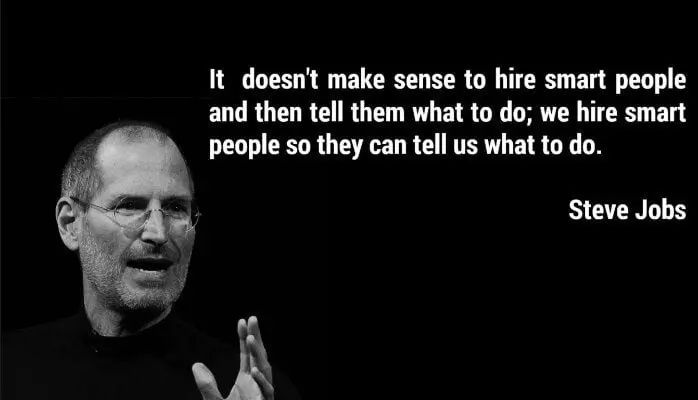
Micromanagers tend to obsess over every single detail instead of looking at the big picture.
The above is the official meaning of micromanagement. From my perspective, micromanagement encompasses 2 key elements, contributing to its essence:
LACK OF TRUST + EXCESSIVE EGO
The lasting repercussions of this practice are genuinely catastrophic in both, the medium and long term:
❌ Employees are under stress and have lower morale – The experience of being micromanaged is profoundly demotivating, particularly for top-performing employees.
❌ Employees have a low scope of learning – Constantly being instructed on what to do and how to do it prevents teams from learning on their own.
❌ Teams feel powerless and develop self-doubt – Excessive control on every single detail leaves them feeling helpless and developing feelings of doubt about their own abilities.
❌ Employees get burnout – Micromanagement fosters a monotonous work environment that ultimately contributes to employee burnout.
❌ Staff turnover increases – Some studies show that over 50% of employees consider changing jobs if they experience micromanagement behavior.
❌ There is no bigger picture – Micromanagers excessively focus on the day-to-day operations, neglecting what is the most important: the big picture.
❌ It hurts the company in the long term – For a business to thrive, every team member must perform at their utmost potential. However, most micromanagers tend to dispense unsolicited advice while disregarding their employee’s actual needs, resulting in demotivation and burnout.
Are you familiar with this type of management?
I have 2 questions to pose:
1️⃣ What strategies can organizations employ to move away from micromanagement and work toward team trust and empowerment?
2️⃣ What concerns me greatly is when the person practicing micromanagement holds the highest position in the company. In such a scenario, how can middle managers and teams effectively counteract this practice?
—
Agree; micromanaging is awful and unnecessary and shows a lack of trust in staff and their abilities.
Unless it’s the CEO doing the micromanaging there’s always a way to stop it, and even if it is the CEO, then their Board and HR should be giving them feedback. Honest feedback to managers is almost more important than to all other employees because of the power they hold. In the wrong hands, it’s detrimental to the organisation. Addressing it with a firm but guiding hand to ensure no manager feels overwhelmed in their role, particularly the junior ones is a role of HR. I believe this is where micro management stems from, not being guided early on in one’s career. The ability to trust your team to do the right thing, the ability to lead from the front whilst not having to do everything yourself is key to learning the basis of good leadership overall. Most young managers want to make a good impression, and if they’ve been promoted into that role, they often end up trying to show others exactly how it’s done. The goal is to show people the road and the objective, then allow your team to do it for themselves.
Underlying the micromanagement a strength, the will to take charge and to do the impossible and beating the odds. Managers with this tendency need to understand that it’s important to keep that strength but do away with the negative impact it has on their team.
One way for them to move away from that tendency is to create more connection and honoring others, to develop empathy, for themselves and others.
But, like all change, it starts with them seeing the impact of their behaviour on others and themselves (it’s exhausting) and wanting to change.