

As your Advocate, my role is to do more than address the present moment, it is to look forward, chart the course, and equip you for what lies ahead before others even comprehend the stakes. In law, just as in life, success depends on anticipation—that is—the ability to understand the consequences of today’s choices and to prepare you to face tomorrow’s challenges with assurance.
⚖️
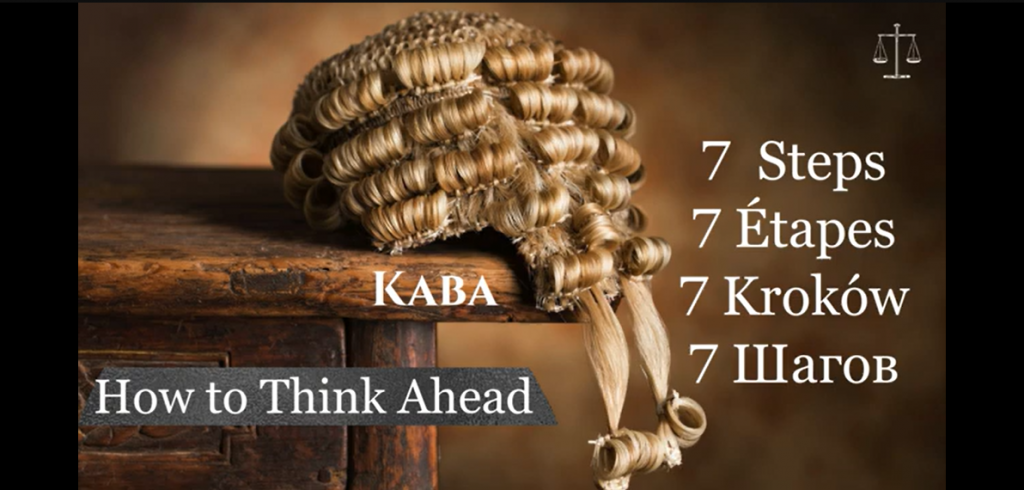
How To Think Ahead ⚖️ 7 Steps – Atapama

This article provides my clients with 7 steps as a practical guide to thinking ahead—offering tools to ensure you remain one step ahead in an unpredictable world.
Step 1 – Assess the Landscape Thoroughly
Every legal matter begins with a comprehensive understanding of the facts. To anticipate effectively, you must establish your current position—your rights, obligations, and potential vulnerabilities. As your lawyer, I encourage you to collect all pertinent details: contracts, correspondence, timelines, and any evidence that defines your situation.
Ask yourself—what could change? What might others fail to notice?
When you ground yourself in this knowledge, you certainly, create a foundation for foresight. A client who masters their landscape is already positioned to identify risks or opportunities that others overlook.
Step 2 – Identify Patterns and Precedents
The law relies heavily on precedent, and life reveals itself through patterns. Anticipation requires you to look back and to see forward.
Reflect on past disputes, decisions, or actions—whether your own or those of others involved. Have similar circumstances occurred before? What were the results?
As your lawyer, I examine legal precedents and trends to predict how courts or opposing parties might proceed. You can adopt this approach in your own context: consider how others have responded in comparable situations and use that understanding to foresee their next step. Recognising patterns ensures that you stay focused with a higher advantage in anticipating what is likely to happen.
Step 3 – Consider the Ripple Effects
Every action generates consequences—some immediate, others delayed. To think ahead, you must evaluate the ripple effects of any decision you make.
If you enter into a contract, what responsibilities might arise in three months, six months, and twelve months? If you contest a ruling, how might it alter relationships or resources in the future?
I advise my clients to assess not only the initial outcome but also the subsequent ones that follow. This layered approach—is effective when applied with care—it ensures you are not caught off guard by what develops later. It is about tracing the entire sequence, not merely the first link.
Step 4 – Prepare for Multiple Scenarios
The future is not a single path—it branches into possibilities. As your Advocate, I do not assume one outcome; I prepare you for several. You must do the same.
Ask—what is the best possible result? What is the worst? What is the most probable?
For each scenario, outline your response in advance—whether it involves negotiations, claims, defences, or adaptations. This is not speculation; it is strategic preparation. Clients who plan for contingencies are more likely to emerge unscathed because they have already considered the possibilities in their minds. You are not reacting—you are directing.
Step 5 – Act Decisively with Timing in Mind
Anticipation without action is futile. Once you have mapped the potential moves, you must act at the optimal moment.
Timing can be your greatest strength—file a claim before a deadline narrows, secure an asset before it is disputed, and negotiate when your leverage is strongest.
I guide my clients to act with precision, not impulsiveness—the highest percentage of legal success depends on well-timed decisions. You possess the same capability: identify the opportunity, seize it, and shape the result before others catch on.
Step 6 – Protect Your Position
Thinking ahead is not solely about advancing—it is also about safeguarding. Protect yourself against the challenges you foresee.
Document everything—conversations, agreements, intentions—to establish a robust record. Reduce exposure by clarifying terms at the outset or declining risks that do not benefit you.
As your lawyer, I ensure your position is reinforced—the majority of disputes fail and peace prevails when you have secured evidence and clarity. You can adopt this practice: anticipate their strategies, block their approaches, and maintain your stance.
Step 7 – Review and Refine Your Approach
Anticipation is an ongoing process, not a one-time act. After protecting your position, take time to review your actions and their outcomes. Assess what worked, what did not, and how you can refine your foresight for the next challenge.
Did your predictions hold? Were your preparations sufficient?
As your lawyer, I continually evaluate our strategy to strengthen your position—the majority of long-term success stems from learning and adapting. You can mirror this discipline: reflect on each step, adjust where necessary, and sharpen your ability to anticipate with every experience.
The Importance of Anticipation
In a world where others fade in confusion, your ability to think ahead distinguishes you. It is not about games or clever tricks—it is about control, clarity, and resilience.
You are not here to be taken by surprise—you are here to lead, to succeed, to prosper.
As a Legal Mediator, I have witnessed the price of being unprepared: lost opportunities, diminished rights, and unnecessary conflicts. However, I have also observed the rewards of foresight—clients who, with my guidance, transformed uncertainty into strength.
Your Next Step
Begin today.
Select one matter—personal, professional, or legal—and apply these steps. Assess, analyse, project, prepare, act, protect.
You will experience the shift ~ from responding to commanding.
My commitment as your lawyer is to support you through this process, to anticipate moves others fail to see, and to secure your future with unwavering diligence. Together, we ensure you are not merely part of the proceedings—you are ahead of each proceeding.
~xxx~
Step 1 ~ Assess the Landscape Thoroughly
Step 2 ~ Identify Patterns and Precedents
Step 3 ~ Consider the Ripple Effects
Step 4 ~ Prepare for Multiple Scenarios
Step 5 ~ Act Decisively with Timing in Mind
Step 6 ~ Protect Your Position
Step 7 ~ Review and Refine Your Approach
xxx
Étape 1 ~ Évaluer le paysage en profondeur
Étape 2 ~ Identifier les schémas et les précédents
Étape 3 ~ Considérer les effets en cascade
Étape 4 ~ Se préparer à plusieurs scénarios
Étape 5 ~ Agir de manière décisive en tenant compte du timing
Étape 6 ~ Protéger votre position
Étape 7 ~ Réviser et affiner votre approche
xxx
Krok 1 ~ Dokładnie ocenić krajobraz
Krok 2 ~ Zidentyfikować wzorce i precedensy
Krok 3 ~ Rozważyć efekty domina
Krok 4 ~ Przygotować się na różne scenariusze
Krok 5 ~ Działać zdecydowanie, mając na uwadze timing
Krok 6 ~ Chronić swoją pozycję
Krok 7 ~ Przeglądać i doskonalić swoje podejście
xxx
Шаг 1 ~ Тщательно оценить обстановку
Шаг 2 ~ Выявить закономерности и прецеденты
Шаг 3 ~ Учитывать волновые эффекты
Шаг 4 ~ Подготовиться к нескольким сценариям
Шаг 5 ~ Действовать решительно с учетом времени
Шаг 6 ~ Защитить свою позицию
Шаг 7 ~ Пересмотреть и усовершенствовать свой подход
xxx
🚀🚀🚀
📚 Book: https://a.co/d/bkrvyKU
📜 Linkedin: https://www.linkedin.com/in/patkaba/
🔗 Website: https://urls.fr/fMAk5a
🎦 Video: • How To Think Ahead ⚖️ 7 Steps ~ Atapama
🚀🚀🚀



One thought on “How To Think Ahead – Anticipating Moves”