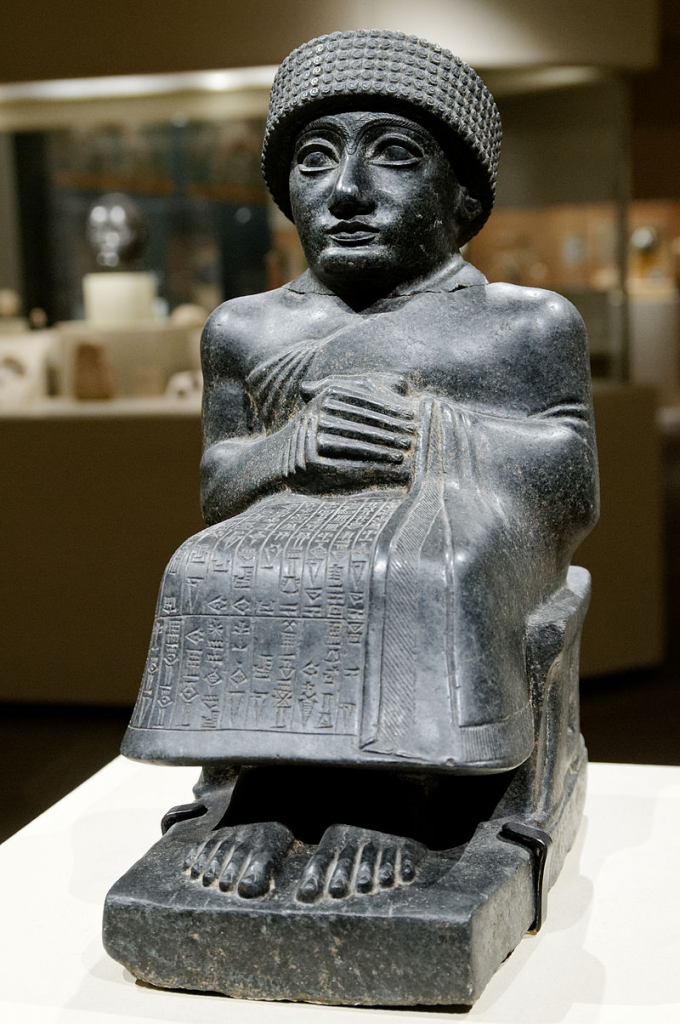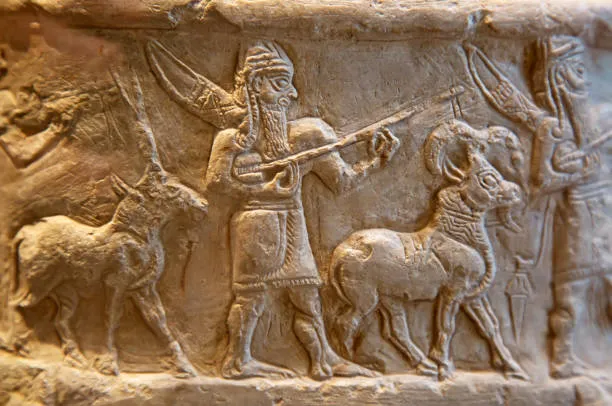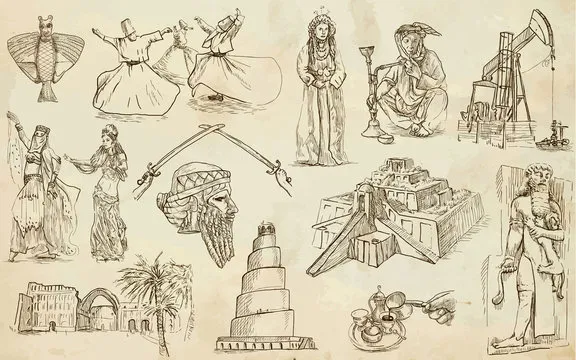
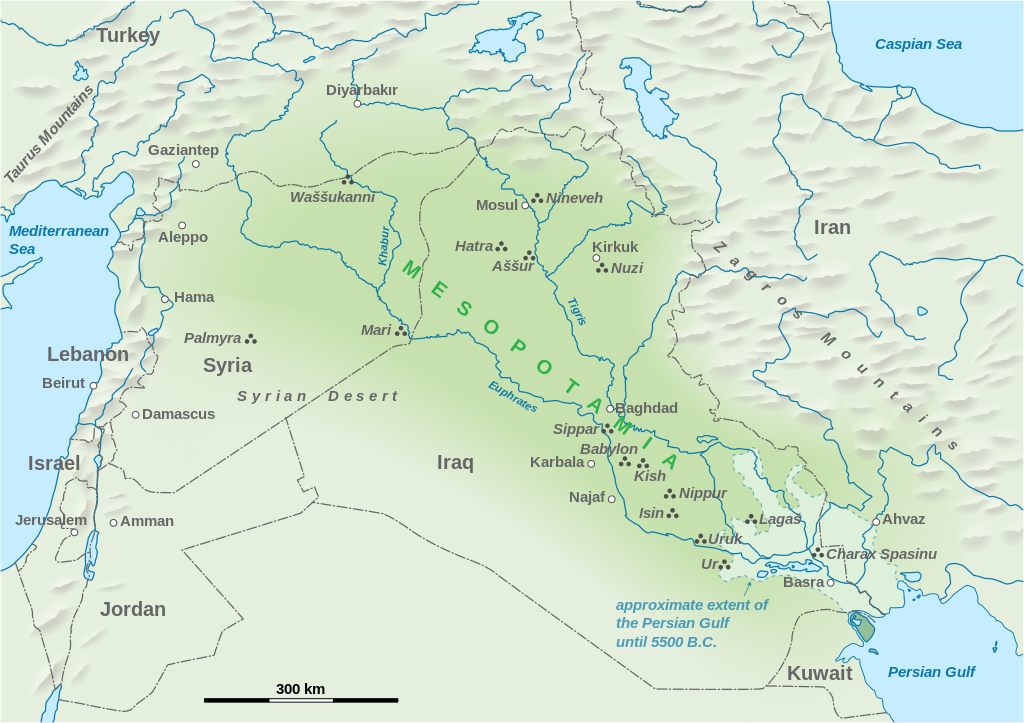
Mesopotamia, also referred to as the “Cradle of Civilization,” was one of the earliest and most influential civilizations in human history. It was located in the region between the Tigris and Euphrates rivers, which is part of modern-day Iraq and parts of Syria and Iran.
Overview
Mesopotamia’s historical significance lies not only in its innovations but also in the way it laid the foundation for many aspects of modern society, making it a vital part of human history.
1. Geography and Environment
- Mesopotamia means “land between the rivers,” referring to the Tigris and Euphrates rivers that flowed through the region.
- The region’s fertile soil made it suitable for agriculture, leading to the development of the world’s first urban societies.
2. Chronology
- Mesopotamia’s history can be divided into several key periods, including the Ubaid period, the Uruk period, the Akkadian Empire, the Babylonian Empire, the Assyrian Empire, and the Neo-Babylonian Empire.
- The first cities in Mesopotamia, such as Uruk, emerged around 4,000 Before the Common Era (BCE).
3. Sumerians
- The Sumerians were one of the earliest and most prominent civilizations in Mesopotamia.
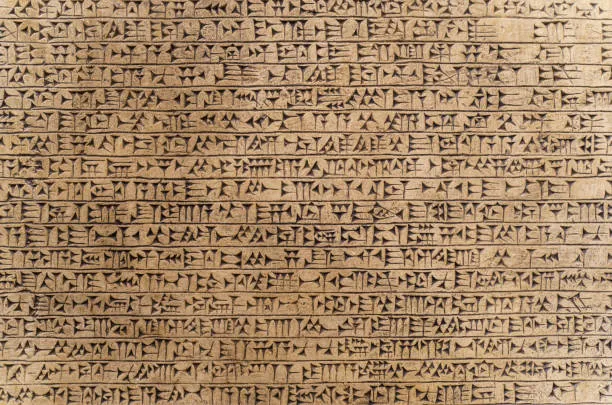
- They developed a system of writing called cuneiform, which was one of the earliest forms of writing in human history.
- Sumerians made significant advancements in mathematics, astronomy, and engineering.
4. City-States
- Mesopotamia was characterized by numerous independent city-states, each with its own government and ruler.
- Prominent city-states included Ur, Uruk, Lagash, and Nippur.
5. Religion and Mythology
- Mesopotamians had a polytheistic religion with a pantheon of gods and goddesses, including Anu, Enlil, and Inanna.
- Epic tales like the “Epic of Gilgamesh” originated in Mesopotamia and provide insights into the culture and beliefs of the time.
6. Achievements
- Mesopotamia made significant contributions to various fields, including agriculture, mathematics, and the legal system.
- The first known legal code, the “Code of Ur-Nammu” and the more famous “Code of Hammurabi,” were created in Mesopotamia.
7. Inventions and Innovations
- The wheel, the plow, and the sailboat were among the technological innovations developed in Mesopotamia.
- They also created the earliest known map, the “Map of Sippar.”
8. Empires
- Over time, several powerful empires, including the Akkadian Empire, Babylonian Empire, Assyrian Empire, and Neo-Babylonian Empire, arose in Mesopotamia, shaping its history.
9. End of Mesopotamia
- The region’s importance waned over time, partly due to invasions by neighboring peoples and the changing course of the rivers, which caused agricultural issues.
- The conquest of Babylon by the Persian Empire in 539 BCE is often seen as the end of Mesopotamia as an independent civilization.
10. Legacy
- Mesopotamia’s legacy is profound. It influenced subsequent civilizations in the Middle East and beyond, including ancient Egypt, Greece, and Rome.
- Many aspects of modern civilization, such as writing, the concept of laws, and urban planning, have roots in Mesopotamia.