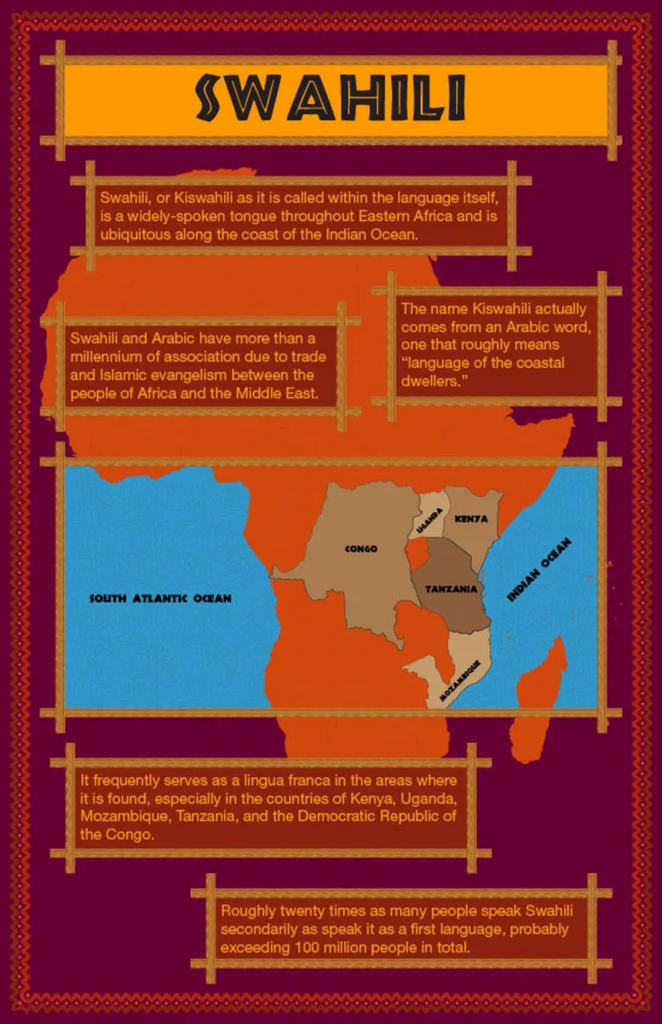
The Swahili language, also known as Kiswahili, is a Bantu language with a rich history and a diverse linguistic and cultural background. Its origins can be traced back to the East African coast, primarily the coastal regions of what is now Kenya, Tanzania, and parts of Mozambique, Somalia, and the Comoros Islands. Swahili is not simply a single language but rather a language group or family with various dialects.
Summary
Swahili is a Bantu language with a history of extensive contact with other cultures, particularly Arab and Persian traders. It has absorbed loanwords and linguistic features from these languages while retaining its Bantu core. Swahili’s role as a lingua franca for trade and its adoption as an official language in East African countries have contributed to its prominence and continued development.
The 1st to 5th centuries CE refer to the period from the year 1 CE (or AD 1, which stands for “Anno Domini” in Latin, meaning “In the year of the Lord”) to the year 500 CE. This period spans the first five centuries of the Common Era and is often used in historical dating to refer to events, developments, and cultures that existed during this time frame.
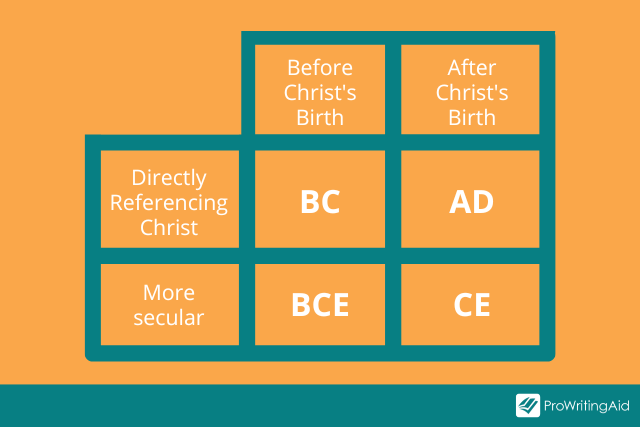
BC and BCE both refer to years before the birth of Jesus Christ, and AD and CE both refer to years after the birth of Jesus Christ. BC and AD reference Christ’s birth directly, while BCE and CE are more secular ways of telling time.
Key points about the origin and background of the Swahili language:
- Bantu Roots: Swahili is a Bantu language, which means it belongs to the larger Bantu language family. Bantu languages are spoken by numerous ethnic groups across sub-Saharan Africa. Swahili has incorporated many Bantu elements into its vocabulary and grammar.
- Early Contact and Influences: The Swahili coast has a long history of contact with various cultures, including Arab, Persian, Indian, and later European traders and explorers. These interactions led to the incorporation of loanwords from Arabic, Persian, and other languages into Swahili.
- Arab and Persian Influence: Swahili’s contact with Arab and Persian traders and settlers dates back to at least the 7th century CE. The Swahili people adopted the Arabic script for writing Swahili, and a significant portion of Swahili vocabulary, particularly in trade and religion, comes from Arabic and Persian.
- Bantu Substratum: Despite the influence of external languages, Swahili retains its Bantu core, including its grammar, basic vocabulary, and linguistic structure. Bantu languages are known for their noun class system, which Swahili also uses.
- Trade and Commerce: Swahili became a significant language of trade along the East African coast, which contributed to its spread and development. It served as a lingua franca for traders and played a crucial role in facilitating trade between African, Arab, and other Indian Ocean traders.
- Colonial Period: During the colonial era, Swahili became a lingua franca for administration, education, and communication in East African territories ruled by European powers, such as the British and Germans.
- Modern Swahili: Swahili is now one of the official languages of Kenya, Tanzania, and the African Union. It is also widely spoken in Uganda, Rwanda, Burundi, and the Democratic Republic of Congo. Swahili is known for its musicality and is often used in literature, music, and film.
The exact origin of the Swahili language is difficult to pinpoint precisely, but it has a long history dating back many centuries. Swahili’s development as a distinct language likely began over a thousand years ago, with influences from various cultures and languages along the East African coast. Here’s a general timeline of Swahili’s development:
- Early Formation (1st to 5th Century CE): The roots of the Swahili language can be traced back to the Bantu-speaking communities that inhabited the East African coast around what is now Kenya, Tanzania, and parts of Somalia. These communities had their own Bantu languages.
- Contact with Arabic Traders (7th Century CE): Swahili began to evolve as a result of trade contacts with Arab traders who established settlements along the East African coast. Arabic loanwords and the Arabic script for writing were adopted into Swahili during this period.
- Influence of Persian and Indian Traders (8th to 15th Century CE): Swahili continued to develop through interactions with Persian and Indian traders, leading to further loanwords and cultural influences in areas such as cuisine, clothing, and architecture.
- Trade and Cultural Exchange (15th to 18th Century CE): The Swahili coast became a hub of trade and cultural exchange, with influences from various African, Arab, Persian, and Indian cultures.
- Colonial Period (19th and 20th Century CE): During the colonial era, Swahili gained importance as a lingua franca for administration and trade in the East African territories controlled by European powers. It was also used in missionary work and education.
- Post-Independence (20th Century CE): After African countries gained independence from colonial rule, Swahili was often promoted as a unifying language and was adopted as an official language in countries like Kenya and Tanzania.
Today, Swahili is a widely spoken language in East Africa and has become one of the official languages of several countries in the region. It continues to evolve and adapt to contemporary needs while retaining its historical and cultural significance.
xxx

The term “Mswahili” is derived from the Swahili language and is used as a prefix to indicate someone’s origin or nationality. In Swahili, “Mswahili” specifically means “a Swahili person” or “of Swahili origin.” It’s similar to how “M” is used in other languages to denote someone’s nationality or identity.
It is important to note that “Mswahili” refers to someone who identifies as a Swahili, and Swahili is both a language and an ethnic group with a rich cultural heritage primarily found along the East African coast.
For example:
- Mswahili: A Swahili person.
- Mkenya: A Kenyan person (with “M” indicating their nationality).
- Mzungu: A term used in East Africa to refer to a person of European descent (with “M” indicating their identity).
xxx