

When considering the doctrines of the Stoics, it is important to remember that they think of philosophy not as an interesting pastime or even a particular body of knowledge, but as a way of life.
x
En considérant les doctrines des stoïciens, il est important de se rappeler qu’ils ne considèrent pas la philosophie comme un passe-temps intéressant ou même comme un corpus particulier de connaissances, mais comme un mode de vie.
x
Rozważając doktryny stoików, ważne jest, aby pamiętać, że nie postrzegają oni filozofii jako interesującej rozrywki ani nawet jako określonego zbioru wiedzy, lecz jako sposób życia.
x
Рассматривая учения стоиков, важно помнить, что они считают философию не интересным времяпрепровождением и даже не особым набором знаний, а образом жизни.
x


The scope of what the Stoics called ‘logic’ (logikê, i.e., knowledge of the functions of logos or reason) was very wide, including not only the analysis of argument forms, but also rhetoric, grammar, the theories of concepts, propositions, perception, and thought. Thus Stoic logikê included not only what we would call logic, but also the philosophy of language and epistemology.
When considering the doctrines of the Stoics, it is important to remember that they think of philosophy not as an interesting pastime or even a particular body of knowledge, but as a way of life.
SEP
The History of Stoicism
Since the Stoics stressed the systematic nature of their philosophy, the ideal way to evaluate the Stoics’ distinctive ethical views would be to study them within the context of a full exposition of their philosophy.
Stoicism originated as a Hellenistic philosophy, founded in Athens by Zeno of Citium (modern-day Cyprus), c. 300 B.C.E. It was influenced by Socrates and the Cynics, and it engaged in vigorous debates with the Skeptics, the Academics, and the Epicureans.
The name comes from the Stoa Poikile or painted porch, an open market in Athens where the original Stoics used to meet and teach philosophy.
Stoicism moved to Rome, where it flourished during the period of the Empire, alternatively being persecuted by Emperors who disliked it (for example, Vespasian and Domitian) and openly embraced by Emperors who attempted to live by it (most prominently Marcus Aurelius).
It influenced Christianity, as well as several major philosophical figures throughout the ages (for example, Thomas More, Descartes, Spinoza), and in the early 21st century saw a revival as a practical philosophy associated with Cognitive Behavioral Therapy and similar approaches.
Stoicism is a type of eudaimonic virtue ethics, asserting that the practice of virtue is both necessary and sufficient to achieve happiness (in the eudaimonic sense). However, the Stoics also recognized the existence of “indifference” (to eudaimonia) that could nevertheless be preferred (for example, health, wealth, education) or dispreferred (for example, sickness, poverty, ignorance), because they had (respectively, positive or negative) planning value for the ability to practice virtue.
Stoicism was very much a philosophy meant to be applied to everyday living, focused on ethics (understood as the study of how to live one’s life), which was in turn informed by what the Stoics called “physics” (nowadays, a combination of natural science and metaphysics) and what they called “logic” (a combination of modern logic, epistemology, philosophy of language, and cognitive science).
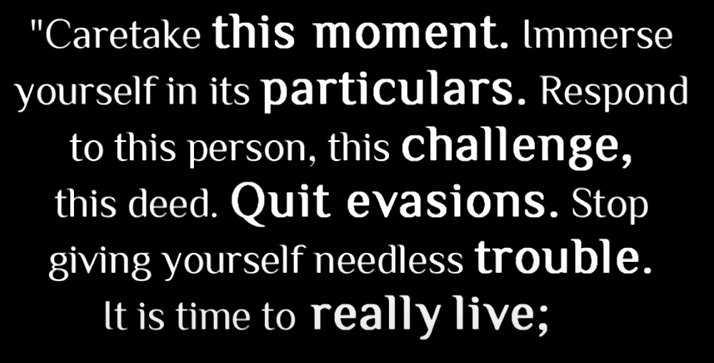






Be Unshakeable – The Ultimate Stoic Quote Collection (Powerful Narration)

Compiled and published by: RedFrost Motivation
Since the Stoics stress the systematic nature of their philosophy, the ideal way to evaluate the Stoics’ distinctive…
Stoicism Stanford Encyclopedia of Philosophy
First published Mon Apr 15, 1996; substantive revision Tue Apr 10, 2018
x



One thought on “Kaba Stoicism For You! 🍀 Каба. Стоицизм для вас!”