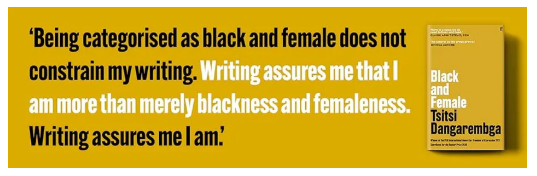
Reading Tsitsi Dangarembga’s Black and Female prompted me to reflect on the relationship between personal identity, political power, and the institutions that shape contemporary international relations. Although the book is not a legal text, its insights extend well beyond literature and autobiography. Dangarembga’s examination of race, gender, colonialism, and belonging provides a valuable framework for understanding how power operates within international law and diplomatic practice.
One of the most striking aspects of Black and Female is its insistence that colonialism should not be regarded solely as a historical event. Rather, it continues to influence social structures, political institutions, and systems of knowledge. This observation is particularly relevant to discussions of international law. Legal norms are often presented as objective, universal, and detached from historical circumstances. Yet many of the foundational principles of international law emerged during periods of European imperial expansion, when legal doctrines frequently served to legitimise colonial governance and unequal relations between states.
Dangarembga’s reflections encourage a more critical examination of these foundations. Her work invites readers to question whose experiences have shaped dominant legal narratives and whose voices have historically been excluded. These questions are central to feminist legal theory, which has long challenged assumptions of neutrality within legal systems. Feminist scholars have demonstrated that law is neither politically nor socially detached. It reflects particular histories, interests, and power relations.
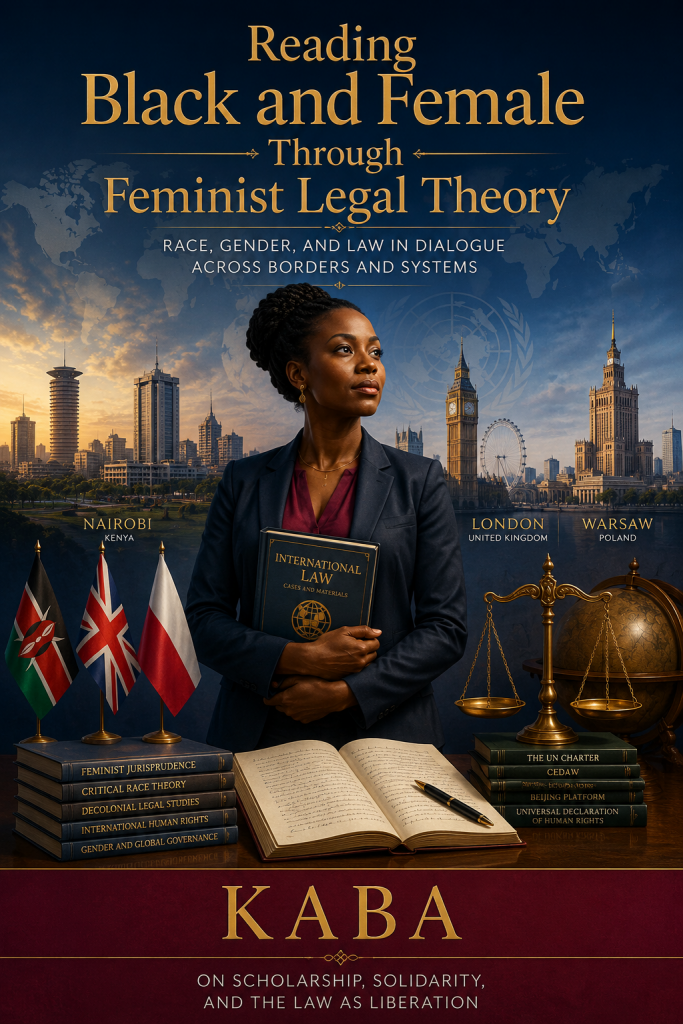
From my position as a Kenyan-British scholar based in Poland, these questions acquire an additional dimension. Living and working across different cultural, legal, and political environments has highlighted the complexity of identity within international spaces. Diplomatic and legal institutions increasingly operate within diverse and interconnected societies, yet discussions of representation often remain limited. Diversity is frequently understood as a matter of numerical inclusion rather than a deeper engagement with differing intellectual traditions and lived experiences.
Dangarembga’s work challenges this limited understanding of representation. Her analysis suggests that meaningful inclusion requires more than visibility. It requires recognition of the historical and structural conditions that shape participation. Within international diplomacy, this raises important questions regarding whose perspectives inform decision-making processes and whose knowledge is treated as authoritative.
These concerns are particularly relevant when considering contemporary debates surrounding feminist approaches to diplomacy. Feminist diplomacy has gained increasing attention in recent years, with several states adopting policies that seek to incorporate gender equality into foreign affairs. While such initiatives represent significant developments, they also reveal tensions between progressive aspirations and institutional realities. A feminist diplomatic framework that focuses exclusively on gender risks overlooking the ways in which race, colonial history, and geopolitical inequality continue to influence international relations.
Dangarembga’s reflections offer an important corrective to this tendency. Her work demonstrates that gender cannot be separated from broader structures of power. The experiences of African women, for example, cannot be fully understood without acknowledging the enduring effects of colonialism, economic inequality, and racial hierarchy. A similar principle applies to international law and diplomacy. Efforts to promote equality must account for the interconnected nature of these forms of power if they are to address contemporary realities effectively.
The Polish context further enriches these discussions. Poland occupies a distinctive position within Europe, shaped by its own historical experiences of occupation, sovereignty, and political transformation. At the same time, contemporary debates concerning migration, identity, and European integration have generated new questions regarding belonging and representation. Observing these developments from a Kenyan-British perspective creates opportunities for comparative reflection. It highlights both the similarities and differences between postcolonial critiques emerging from Africa and discussions of historical memory and national identity within Central and Eastern Europe.
What emerges from Dangarembga’s work is not a rejection of international institutions but a call for greater critical engagement with them. Her essays encourage readers to recognise that systems of governance are shaped by historical processes and that legal and political structures are neither inevitable nor immune from scrutiny. This perspective aligns closely with contemporary feminist legal scholarship, which seeks to expose hidden assumptions within legal frameworks and to imagine more inclusive approaches to justice.
Ultimately, Black and Female offers insights that extend beyond literature into questions of law, diplomacy, and global governance. The book serves as a reminder that international institutions are not abstract entities operating above society. They are human creations shaped by particular histories, values, and power relations. Recognising this reality creates space for a more reflective and inclusive approach to international law – one that acknowledges historical inequalities while remaining attentive to the diverse experiences that continue to shape our interconnected world.