Across many Black African communities, family responsibility is deeply respected. Children are often raised with the expectation that they will support their parents financially once they become successful. While this cultural value promotes unity and survival, it can also create silent injustice when some children carry the entire financial burden while others contribute little or nothing.
A growing concern discussed openly among lawyers, mediators, and professionals within African families is the issue of “economic favoritism” and parental neglect toward the very children who sacrificed the most. In many cases, one child pays school fees for siblings, covers medical bills, buys homes, funds businesses, and supports aging parents for decades, only to later be excluded from inheritance, insulted publicly, and/or emotionally abandoned.
This creates what many legal professionals describe as “informal financial exploitation within kinship structures.”
Officium Familiae, Controversia Hereditatis, et Injustitia Pecuniaria in Familiae Africanae Nigrae: Brevis Consilium Iuridicum
Common Patterns Seen by Legal Professionals
- One child becomes the family provider
- Often, the eldest or most educated child.
- Carries financial responsibility for siblings and parents.
- No written agreements exist
- Money transferred over the years is treated as “family duty.”
- Property purchased may remain in parents’ names and, at times, be transferred to quite entitled non-working grandchildren.
- Parents redistribute benefits unfairly
- Assets are later given to non-contributing relatives.
- The contributing child receives little protection.
- Emotional manipulation replaces accountability
- The provider is labeled “disrespectful” when asking questions.
- Cultural obedience is used to silence legal concerns.
- Inheritance disputes emerge before and after death
- Extended relatives claim equal rights.
- Courts struggle because the evidence is undocumented.
- Documented evidence is ignored by the unjust relatives.
Legal Key Issues
1. Unjust Enrichment
In many legal systems, a person should not unfairly benefit from another’s financial sacrifice without compensation and recognition.
If a child funded:
- land purchases,
- family businesses,
- construction projects,
- elder care,
there are grounds to claim beneficial ownership and reimbursement where evidence exists.
2. Constructive Trusts
Courts in some jurisdictions recognize that although property is legally registered under one name, another person may hold an equitable interest because they financed it.
Example:
- A son/daughter pays for the construction of a family house.
- The property remains under the parents’ name.
- Later the house is transferred to another sibling.
A court may impose a constructive trust if financial contribution is proven.
3. Financial Abuse Within Families
Financial abuse is not limited to spouses or strangers. It includes:
- coercive dependence,
- exploitation of guilt,
- unequal extraction of resources,
- manipulation through culture or inheritance promises.
Many African legal systems are increasingly recognising elder-family financial disputes as civil matters deserving formal review.
Legal and Practical Solutions
1. Document Every Major Contribution
Keep:
- bank transfers,
- receipts,
- land agreements,
- medical payment records,
- text messages,
- voice notes,
- witness statements.
Without evidence, courts often treat payments as voluntary gifts.
2. Use Written Family Agreements
Families should formalise:
- who owns what,
- repayment expectations,
- inheritance intentions,
- caregiving responsibilities.
Even simple signed documents reduce future conflict.
3. Register Joint Ownership
If financing:
- land,
- houses,
- businesses,
ensure ownership reflects actual contribution percentages.
4. Create Valid Wills Early
Parents should prepare legally enforceable wills to avoid:
- sibling wars,
- tribal/customary conflicts,
- opportunistic relatives.
Transparent succession planning protects family peace.
5. Establish Family Mediation Structures
Before litigation:
- family meeting,
- neutral mediator,
- lawyer review,
- written settlement.
This preserves relationships while addressing injustice.
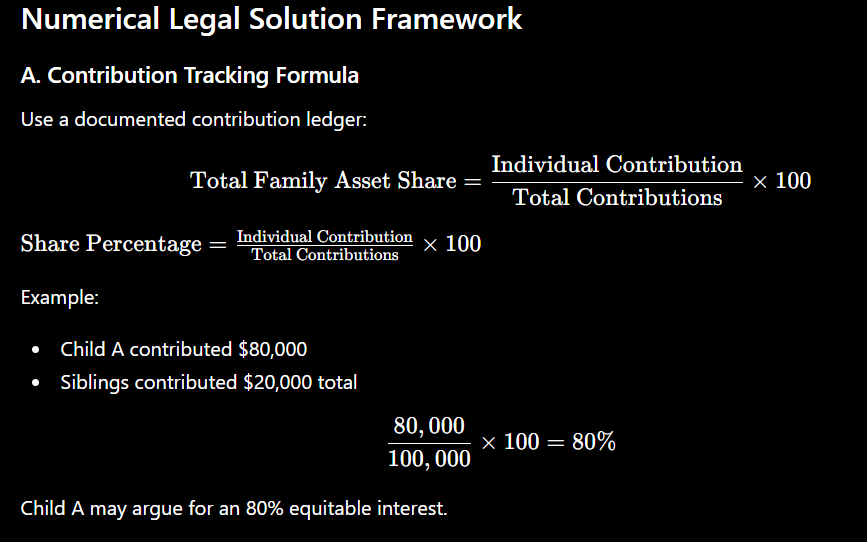
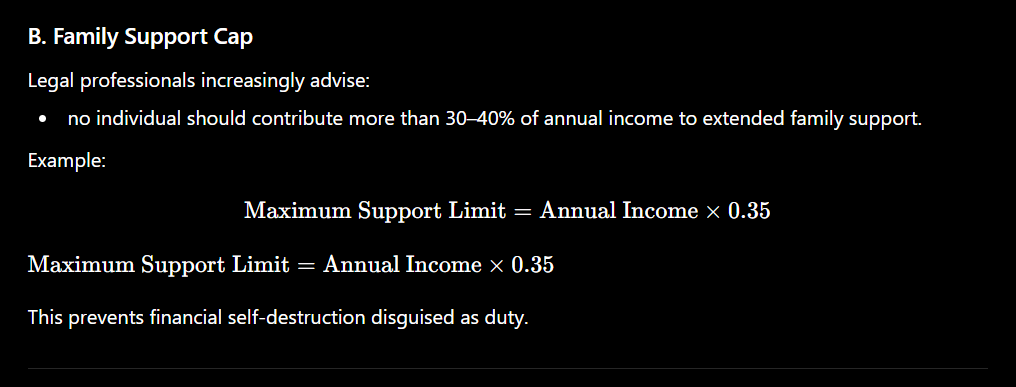
Legal Solution Framework

Conclusion
Family support remains one of the strongest values in African culture. However, love, duty, and respect should not become tools for exploitation. The painful reality many lawyers now observe is that some parents and relatives unintentionally and/or deliberately ignore the very children who sacrificed most for family survival.
Justice within families requires:
- transparency,
- documentation,
- fair inheritance,
- legal structure, and
- honest communication.
Culture and law should work together, not against the child who carried the family through hardship.
Artykuł omawia problem nierówności finansowej i niesprawiedliwości w rodzinach czarnoskórych Afrykanów, gdzie jedno dziecko często ponosi ciężar wsparcia rodziny, podczas gdy inni pozostają bierni. Opisano przypadki, w których rodzice ignorują dzieci, które ich utrzymywały, oraz konsekwencje prawne takich sytuacji. Autor przedstawia możliwe rozwiązania: dokumentowanie wkładów finansowych, umowy rodzinne, wspólne własności, sporządzanie testamentów i mediacje rodzinne. Zastosowano również proste formuły liczbowe do określania udziałów w majątku i maksymalnych limitów wsparcia finansowego.
Статья рассматривает проблему финансовой несправедливости в семьях чернокожих африканцев, где один ребенок часто несет основное бремя поддержки семьи, в то время как другие остаются пассивными. Описываются случаи, когда родители игнорируют детей, которые их содержали, и юридические последствия таких ситуаций. Автор предлагает возможные решения: документирование финансовых вкладов, семейные соглашения, совместное владение имуществом, составление завещаний и семейная медиация. Также представлены простые числовые формулы для определения доли в имуществе и максимальных лимитов финансовой поддержки.