Dies Cogitationis Profundae et Cordium Mutantium.
On the first day of January 2026 the whole world was focused on remarkable moments and major developments that were trending across nations and capturing public attention. In New York City a new mayor was inaugurated and delivered his first address to the people by marking a fresh beginning for the city. In Switzerland, a devastating fire at an Alpine bar resulted in dozens of deaths and many injuries prompting widespread mourning and urgent investigations. Leaders across the globe including the Pope called for peace and goodwill in countries affected by violence and families suffering hardship.
Across Europe and Asia cities ushered in the New Year with celebrations ranging from traditional festivities to subdued ceremonies in solidarity with communities hit by recent disasters. Economic trends were in the spotlight too with mixed performances in stock markets and new policies shaping the cost of living in places like Australia. Weather phenomena such as dense fog in Delhi and freezing water swimming events in the United Kingdom became part of the social conversation about the start of the year. All of these trends and stories reflected a world that was both hopeful and sober as people around the globe paused to reflect on the state of human relations and the responsibilities we carry toward one another.
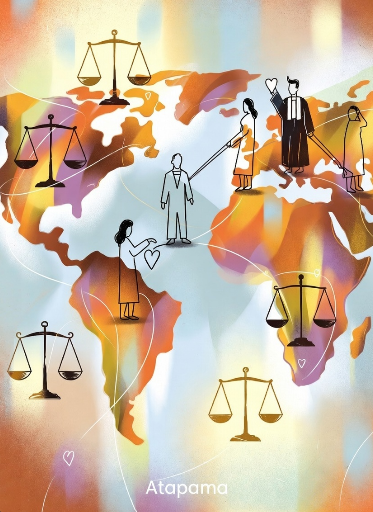
There is an idea of a radical reappraisal of relationships and human connections, and what that might mean for international law and global societal structures. We consider how a day of introspection and evaluation of personal ties can mirror, affect and lead to broader changes in how nations interact under legal frameworks.
In the early hours of 1st January 2026, millions of people woke with a sense of reflection, introspection, and a renewed need to reexamine how they relate to others. It is a personal experience that many describe as a difficult yet necessary isolation of self, a realisation that irrespective of how close we are to others no one can fully feel what another person feels. This moment of deep thought is not just a private affair. It has implications for how human beings understand their relationships and responsibilities to each other on a global scale. International law is built on the premise that sovereign states should cooperate for the protection of human rights, peace, and prosperity. The personal reappraisal of one’s relationships with family, friends or loved ones can stimulate similar questions about how states relate to one another.
International law is a body of rules and principles that governs the conduct of states and international organisations in their interactions with each other. It aims to uphold justice, peace, and equality. When individuals take time to think about what they contribute to their relationships and what they gain from them, it can foster empathy, accountability, and mutual respect.
On a global level, these qualities are mirrored in the values that underpin international legal frameworks such as those found in treaties, conventions, and customary international law. At its most fundamental level, the law seeks to constrain the use of force, protect human dignity, and promote cooperation. These are reflections of ethical principles that many individuals apply in their personal reconsiderations of how they relate to others.
In practice, this idea of reevaluating relationships can translate into how nations approach diplomatic negotiation, conflict resolution, and human rights obligations. For example, when states enter a treaty they commit to certain principles knowing that compliance is expected. The act of entering such agreements is itself a form of reappraisal. It is an acknowledgement that cooperation and mutual respect can advance shared goals. When a country reviews its obligations under law, it may find gaps between its commitments and its behaviour. That reflection can lead to legal reform, greater compliance with international norms and a stronger emphasis on accountability. This is analogous to personal re-assessment, where individuals question whether their behaviours align with their values.
One clear area where this process plays out is in human rights law. The Universal Declaration of Human Rights and subsequent binding treaties such as the International Covenant on Civil and Political Rights that create legal standards which states are expected to uphold. A state that takes time to reappraise its treatment of minority groups, for example, may find that it needs to change legislation or practice in order to meet its obligations. This process often involves public debate, legal challenges, and social movements that challenge the status quo. What begins as a private recognition of the need for change in how one relates to others can culminate in broad legal reforms that protect the dignity and rights of many.
Consider how nations responded to calls for peace and unity on the 1st of January. World leaders, religious figures and civic voices called for reconciliation, dialogue and peaceful resolution of conflict. These appeals are rooted in the belief that legal frameworks should be tools for resolving disputes without harm. In international law, dispute settlement mechanisms such as arbitration, adjudication before international courts, or diplomatic negotiations reflect a deliberate attempt to balance interests and protect peace. The personal insight that no one can fully inhabit another’s experience can foster greater humility which in turn makes cooperative dispute resolution more effective. When negotiation is entered with an appreciation of the other party’s perspectives, it is more likely to produce durable solutions that respect the underlying human needs at stake.
Another significant sphere of international law where reappraisal plays a role is in environmental law and transnational obligations. Climate action and sustainable development goals require states to consider not only their domestic interests but also their obligations to future generations and to vulnerable populations abroad. The act of reflection on how we relate to the natural world and to people in far away places leads to legal commitments like the Paris Agreement and other multilateral environmental treaties. These treaties rely on a collective recognition that short-term self-interest must give way to long-term cooperation for the common good. When individuals reexamine their own behaviours and values in relation to others, this mirrors the collective commitment necessary to implement and enforce international environmental law. It nurtures a culture of responsibility and interdependence rather than isolation and self-interest.
There is also a growing emphasis on global justice and accountability for abuses that affect humanity as a whole. Institutions such as the International Criminal Court (ICC) exist to hold individuals accountable for egregious violations such as genocide, war crimes, and crimes against humanity. The very existence of such institutions is an expression of shared values that transcend national borders. They reflect a collective reappraisal of how human beings should be treated and what the international community must do when those standards are violated. The legitimacy and effectiveness of these institutions depend on states and peoples recognising that there are moral and legal obligations which must be upheld even when it is difficult to do so.
International humanitarian law, which governs conduct during armed conflict, serves a similar purpose. Its laws are designed to protect those not participating in hostilities and to limit suffering. When nations engage with these laws, they are, in effect, acknowledging a shared humanity that must be respected even in times of extreme tension. Personal reflections on isolation, empathy, and connection echo through the legal principles that seek to limit harm and protect dignity. These principles are themselves the product of centuries of legal, ethical, and philosophical debate about how humans should relate to one another.
The effects of a day of introspection on international law are not direct in a linear sense. Individuals reflecting on their relationships do not instantly transform legal structures. However, they influence social attitudes, cultural norms, and political will which are essential for legal change. When societies value empathy, mutual respect, and conscientious self-evaluation those values find expression in the laws that govern conduct both within and between nations. Law does not operate in a vacuum. It arises from human interaction, from shared values, and from the persistent effort to resolve conflicts in ways that uphold justice.
Thus a radical reappraisal of one’s life and relationships can contribute to greater awareness of global interdependence. It can inform public discourse, shape policy priorities, and strengthen legal institutions tasked with protecting human dignity, peace and cooperation. A world in which people are encouraged to look beyond illusions in their personal connections is a world more likely to support legal systems that require nations to confront difficult questions about how they use power, how they protect vulnerable populations, and how they contribute to global well-being.
Briefing
The notion of a day devoted to looking inward and reassessing how we relate to each other offers a powerful metaphor for global legal challenges. The qualities that underpin meaningful personal reflection are not so different from those that sustain effective international law. These include honesty about one’s limitations, a willingness to confront uncomfortable truths, and a commitment to act in ways that respect the humanity of others. As the world began 2026 with both celebration and sober contemplation, it revealed the ongoing need for reflection at all levels of human society. From private relationships to treaties between states, the work of understanding and cooperating with others is never finished. It requires constant questioning, thoughtful dialogue, and the courage to change.
On the first day of January we stood apart
Yet felt the pulse of every distant heart
The world whispered truth in voices hushed and clear
In asking what we give and what we hold dear
We walk alone but linked in human song
Learning where we falter and where we belong
In tables of law written bold and grand
We seek the grace to offer a steady hand.
В первый день января мы шли в тиши
Внимая голосам сердец в дали
Мы спрашивали что даем и что терпим
Где пути сходятся и где они разли
В законах мира, строгих и ясных строк
Ищем силы быть рядом невзирая на тревог
Пусть в сердце каждого будет свет
Чтобы мир наш стал добр и светел.

XXX